
Tiny House For Sale in Australia
Quick answer: A tiny house for sale in Australia typically ranges from $80,000 to $250,000+ for a professionally built unit. Luxury modular models designed for hospitality use — like Joey Luxe villas — start from around $99,000 and are engineered to generate $250–$600+ per night as staycation or glamping assets. This guide covers all types, prices, approval requirements by state, ROI benchmarks, and what to look for before you buy.
Australia's tiny house market has shifted. What began as a lifestyle and affordability movement has evolved into a serious commercial category — one where landowners, glamping operators, and resort groups are buying modular units not to live in, but to earn from as high-yield hospitality assets.
In 2026, a well-positioned luxury tiny house on a desirable rural or coastal site can generate more nightly income than a traditional investment property at a fraction of the capital cost. With the national median dwelling price passing $1 million in early 2025, tiny houses have emerged as a genuinely competitive alternative for yield-focused buyers.
But the category is not uniform. A $54,000 container-style unit and a $190,000 architect-designed prefab villa are both listed as "tiny houses for sale in Australia" — and they serve completely different purposes, buyers, and income profiles.
What Is a Tiny House for Sale in Australia?
A tiny house in Australia is a compact dwelling — typically between 15m² and 50m² — that is either fixed to a permanent foundation or built on a trailer for relocation. The term covers a wide spectrum: from budget-entry container homes and flat-pack units to architect-designed, hotel-grade premium modular accomodation assets engineered for short-stay hospitality use.
The key distinction buyers need to understand in 2026:
Residential tiny houses — designed for full-time or part-time living, prioritising affordability and sustainability.
Joey Luxe villas sit firmly in the second category. They are not tiny houses that happen to be rentable — they are premium modular accommodation assets that happen to be compact.
What most people don't realise: a well-designed luxury tiny house in a coastal or nature-adjacent location can realistically outperform a standard investment property on a yield basis, at a significantly lower entry cost.
Why Joey Luxe Hospitality Asset
Architecture Design
Luxury Prefab Modular Villas
Factory-precision built with premium materials: fluorocarbon-baked aluminium cladding, bamboo composite interiors, full double-glazing, integrated climate control, smart-lock systems. Designed explicitly to command premium nightly rates and deliver a hotel-grade guest experience.
Design-led
Capsule Houses
Pod-shaped or geometric modular units for premium short-stay hospitality. High design, futuristic aesthetics, strong guest experience focus. See our Capsule House Australia guide →
Joey Luxe Tiny House Prices in Australia (2026)
Prices vary significantly by build type, size, specification, and supplier.
Build type
Price range (AUD)
Best use
Luxury prefab villa (1-bed)
$99,000 – $129,000
Premium staycation/glamping
Luxury prefab villa (2-bed)
$139,000 – $169,000
Premium staycation/glamping
Joey Luxe note: Our villas are delivered turnkey-ready with premium finishes, smart locks, climate control, and full double-glazing included as standard — not as add-ons.
Our luxury hospitality villa is designed for the guest — panoramic glazing to maximise views, hotel-grade bathroom fittings, integrated smart lock systems for keyless self-check-in, and climate control for year-round comfort.
Income potential
Illustrative ROI scenario — single luxury villa
Nightly rate by location type
- Regional nature/coastal:$250–$450/night
- Premium glamping/nature immersion:$350–$600+/night
- Farm stays, vineyard or hinterland:$200–$380/night
Who Buys Tiny Houses for Sale in Australia?
Staycation & glamping operators
Adding premium room inventory quickly, without 18–24-month construction timelines. Key priorities: fast deployment, premium guest experience, high nightly rate capability, and durability for high-volume occupancy.
→ See our guide: Tiny Houses for Staycation Operators
Hotel & resort operators
Adding standalone luxury villa units to existing property inventory — often commanding the highest per-key rate on the property — without a major construction project.
→ See our guide: Tiny Houses for Hotel & Resort Operators
Landowners & individual investors
Converting idle acreage into a cash-flowing asset. Lower capital than full development, relocatable if circumstances change, ability to start generating income quickly. Many use the villa personally for part of the year — lifestyle plus income.
→ See our guide: Tiny Houses for Landowners & Investors
Council Approvals & Regulations in Australia
Australia does not have a single national framework for tiny house approvals. Rules vary by state, by council, and by whether the unit is fixed or on wheels.
The key distinction: fixed vs on-wheels
Approval by building type
- NCC compliance required:Fixed tiny houses on foundations — Class 1A dwelling standards
- DA typically required:Fixed tiny houses, modular villas installed on footings, secondary dwellings
- Often exempt from DA:THOWs parked on land with an existing primary dwelling (state and council specific)
- Road registration rules:THOWs must comply with national road transport dimensions: max 2.5m wide, 4.3m high, 12.5m long
Joey Luxe villas: As hospitality assets, they are typically deployed under glamping/tourism land use approvals rather than residential dwelling approvals. Requirements vary by state and local council. Our team can advise on the typical approval pathway for your location and use case.
What to Look for Before Buying
These are the non-negotiables that separate a smart investment from an expensive mistake.
Fit-for-purpose design
Is the unit designed for what you actually need it to do? A residential tiny house has different design priorities to a hospitality-grade villa targeting $300+ per night.
Build quality and materials specification
Request a full materials spec. Key indicators: aluminium cladding, double-glazed windows, high-density insulation, and commercial-grade fixtures. These affect long-term maintenance costs as much as guest experience.
Compliance and approval pathway clarity
A supplier who cannot explain the approval pathway for your specific state and use case is a risk. Ask directly: "What approvals will I need for this unit on my land, for short-stay hosting?"
Delivery and installation logistics
Confirm: What is the maximum site access requirement? What site preparation is needed? Is a crane required? Who manages utility connections?
Warranty and after-sales support
What structural warranty is provided? Can the supplier provide references from existing commercial operators? What is the maintenance schedule and expected lifecycle?
ROI transparency
Any serious supplier of hospitality-grade tiny houses should be able to give you realistic revenue scenarios and occupancy benchmarks for your region. If a supplier cannot or will not model your ROI — be cautious.
Joey Luxe Models for Sale in Australia
Joey Luxe builds premium modular villas purpose-designed as high-yield hospitality assets. Both models are available Australia-wide, with delivery and installation managed from enquiry to site-ready.
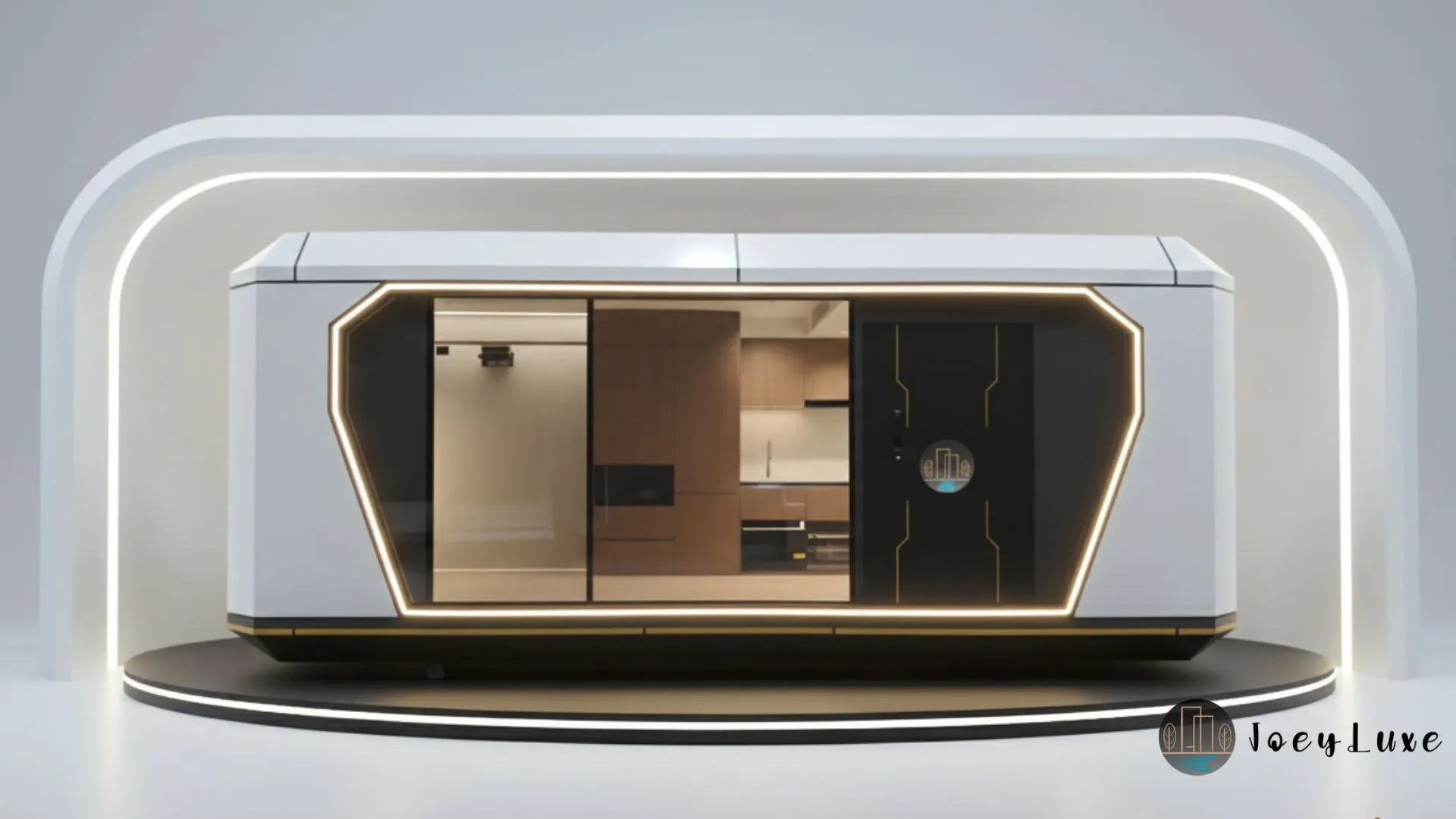
Panoramic double-glazed windows, premium kitchen and bathroom, smart lock system, and integrated climate control. Built for the guest experience that generates 5-star reviews and repeat bookings.
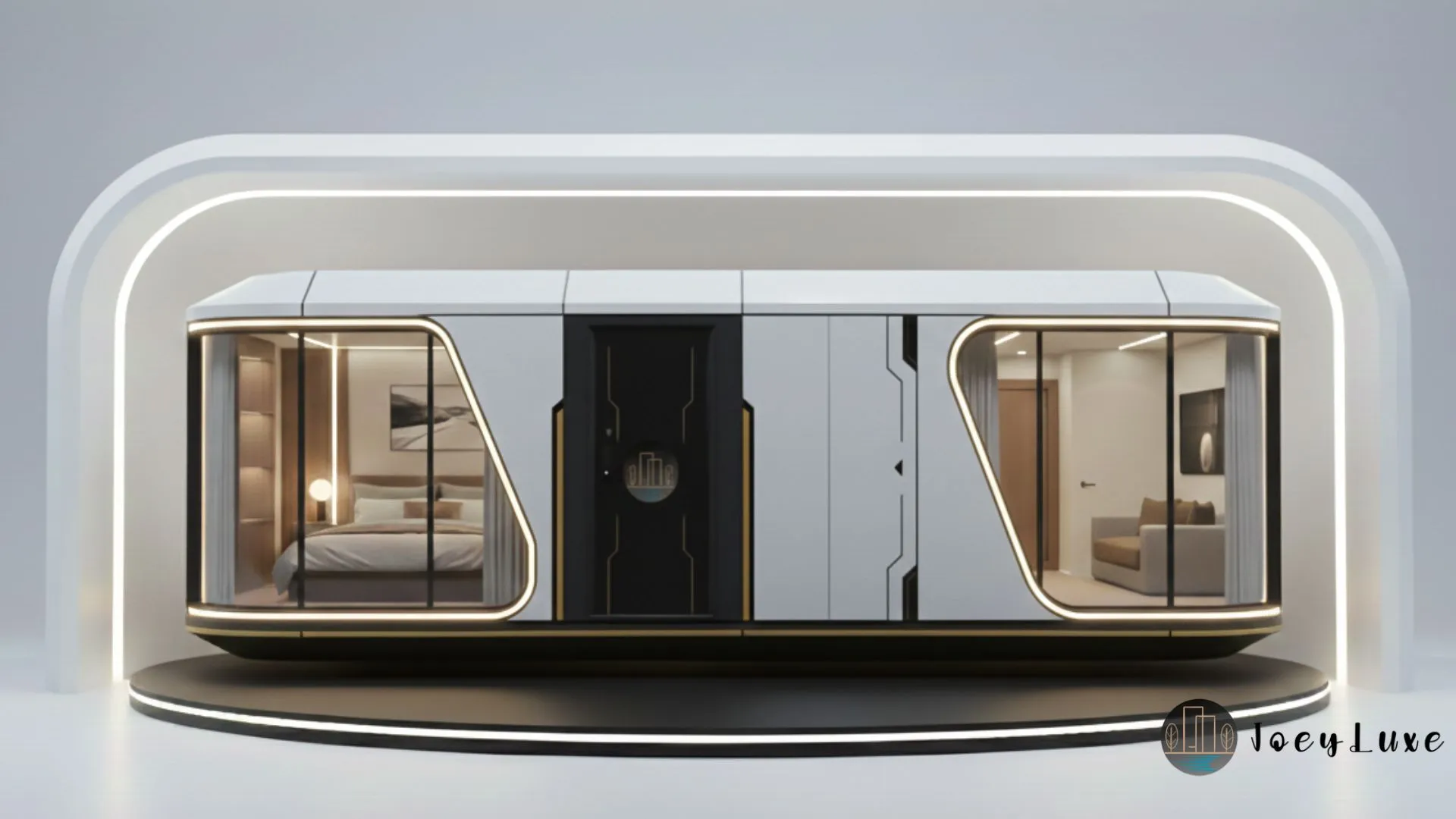
Separate sleeping configurations, full resort-grade finishes, and greater floor area — built to command the highest per-key rates on any property. Ideal for families, couples' retreats, and resort operators.
Ready to see which model suits your land and income goals?
Our team can model your ROI, assess your site, and walk you through the approval pathway for your state.
Frequently Asked Questions
How much does tiny house cost in Australia in 2026?
Professionally built tiny houses in Australia range from approximately $80,000 for an entry-level prefab unit to $280,000+ for a luxury 2-bedroom modular villa. The median for a professionally built unit is around $80,000–$150,000. Joey Luxe luxury modular villas start from approximately $99,000 for a 1-bedroom unit, whereas $159,000 for 2-bedroom engineered specifically for hospitality and investment use.
Can I put a tiny house on my land in Australia?
Yes, in most cases — but the specific requirements depend on your state, local council, whether the unit is fixed or on wheels, and your intended use. For residential use with an existing primary dwelling, many councils allow a THOW without a DA. For commercial short-stay or glamping use, a planning or development approval is typically required. Always contact your local council before purchase.
Do tiny house need council approval in Australia?
It depends on the type and intended use. Fixed tiny houses on permanent foundations generally require a Development Application (DA) and NCC compliance. Commercial short-stay and glamping deployments typically require tourism land use or DA approval. Rules vary significantly by state and local council.
What is the best tiny house for Airbnb income in Australia
A luxury 2-bedroom modular villa in a scenic, nature-adjacent or coastal location consistently generates the strongest Airbnb yield relative to cost. Key factors are design quality (panoramic windows, premium finishes, outdoor amenity), location, and guest experience design. Joey Luxe The Juniper model is specifically engineered for this use case.
How much can a tiny house earn on Airbnb in Australia?
In premium locations, a well-designed luxury tiny house can earn $250–$600+ per night. At a conservative 60% occupancy and $300 average nightly rate, a single unit generates approximately $65,700 per year in gross revenue. The actual amount depends on location, design quality, occupancy management, and seasonal demand patterns.
Is a tiny house a good investment in Australia?
For the right buyer in the right location, yes. Tiny houses are one of the most capital-efficient ways to generate short-stay income from land you already own. A luxury modular villa at $159,000 all-in generating $65,000+ per year gross yields a payback period of under 2.5 years. Outcomes depend on location quality, unit quality, management, and local approval factors.
Are Joey Luxe villas available in all Australia states?
Yes. Joey Luxe delivers Australia-wide, including NSW, Victoria, Queensland, Western Australia, and South Australia. Approval requirements vary by state and local council — our team can provide guidance on the typical pathway for your location and intended use.