
Know the numbers
before you commit
a single dollar.
A rigorous feasibility study is the difference between a capsule house investment that performs and one that underperforms. This is the complete investor-grade framework — demand analysis, cost modelling, sensitivity testing, and clear go/no-go criteria.
Run the ROI calculator Investment overviewWhat a capsule house feasibility study actually does — and why it matters
A feasibility study is not a document for a lender. It is a decision-making tool for you. Completed rigorously before any capital is committed, it answers the fundamental question: do the demand, cost, and revenue conditions at this site and with this product combine to produce a viable, risk-managed investment?
For Joey Luxe capsule houses, the feasibility picture is considerably cleaner than for traditional accommodation construction. The acquisition cost is known before you sign. The approval pathway is more predictable. The timeline to first revenue is weeks, not years. And the operating cost structure is modellable from day one based on comparable operator data.
What the feasibility study cannot do is substitute for a bad location or an unrealistic nightly rate assumption. Its purpose is to surface those issues before they cost you money — not after.
Ten criteria every capsule house feasibility study must assess
Location demand — is there proven appetite?
Search Airbnb and Hipcamp for comparable listings within 30km. Count active listings, examine nightly rates, and estimate occupancy from review frequency. 20+ reviews per property in the past 3 months at $250+ per night indicates demonstrated, sufficient demand for the product category.
Zoning and approval pathway
Confirm your land's zoning classification with the relevant local government. Identify whether short-stay accommodation is a permitted, assessable, or prohibited use. If assessable, establish the typical approval timeframe and cost for your LGA. Joey Luxe can assist with this assessment at no cost.
Achievable nightly rate — evidence-based
Pull nightly rate data from three to five comparable listings that are already operating successfully in your corridor. Do not set your target rate at the top of the range. Use the median of well-reviewed comparable properties as your base case and model the top of range as your upside scenario only.
Capsule house acquisition cost
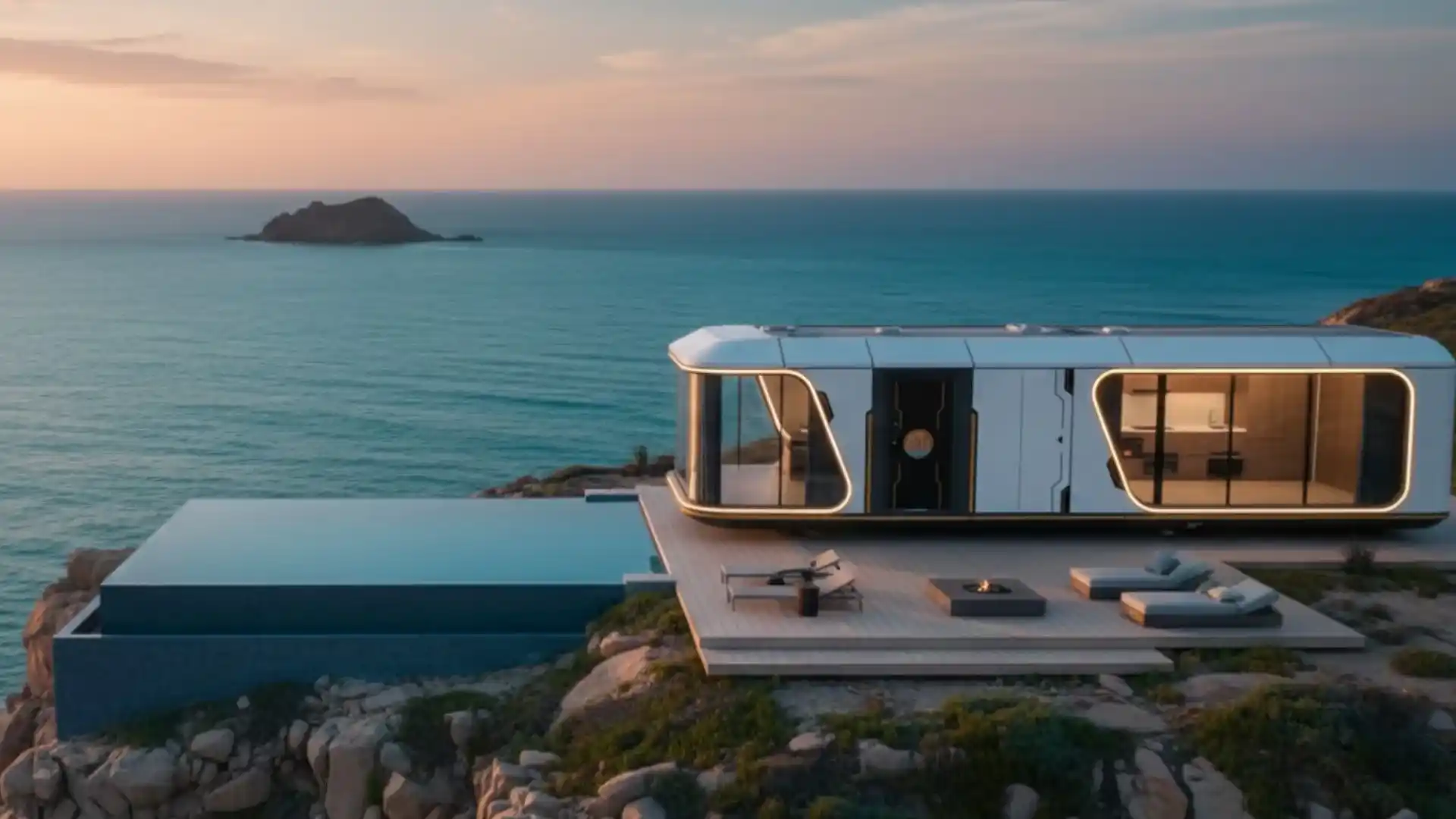
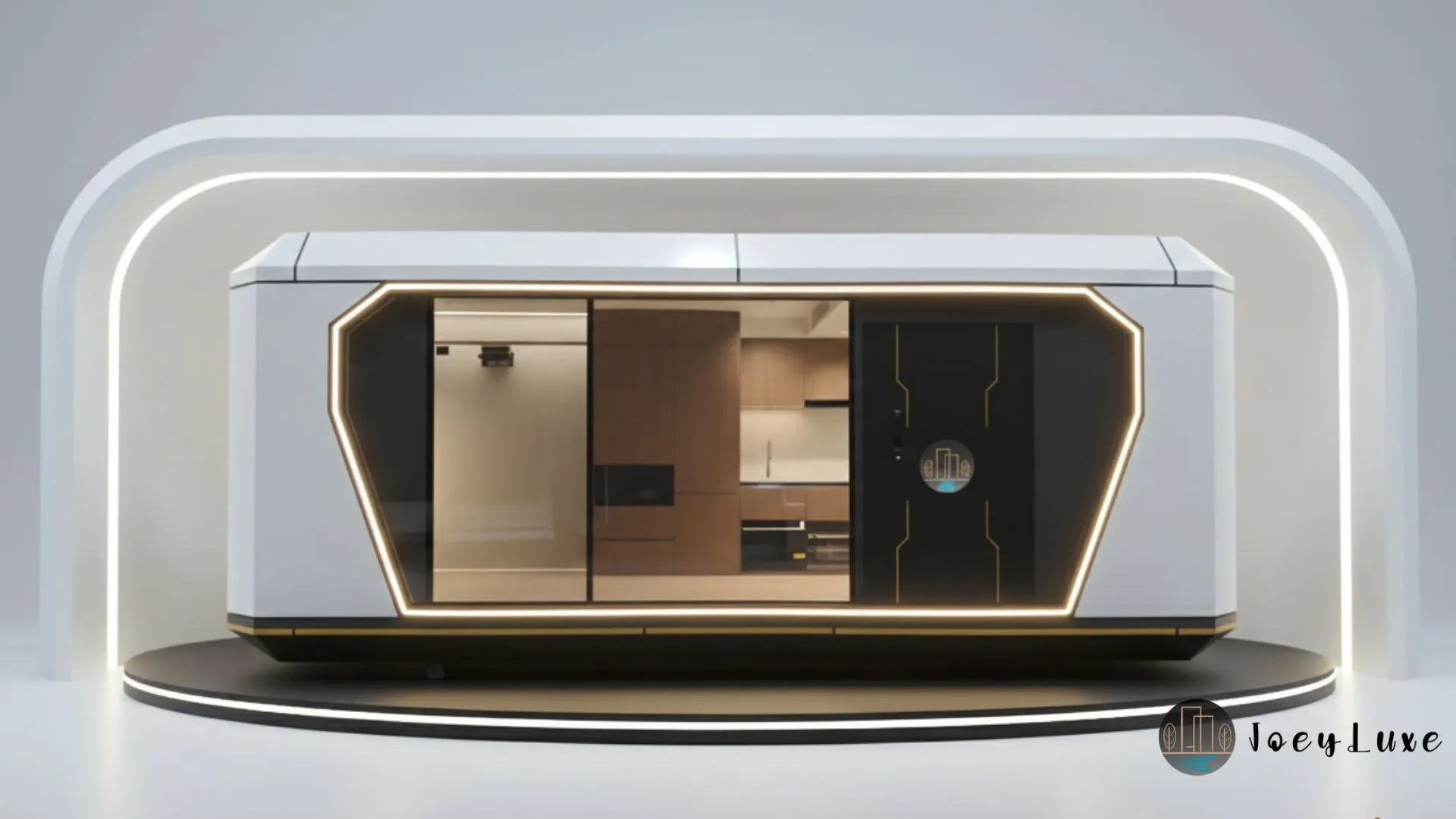
The Jetstone starts from AUD $99,000 and The Juniper from AUD $156,900. Both figures are known before you sign. Include delivery and crane placement costs in your all-in acquisition figure — Joey Luxe provides these at the site assessment stage.
Site preparation cost
Level and compact the capsule footprint, create a gravel or concrete pad, and connect or install power, water, and waste management. Most sites range from $3,000–$20,000 depending on terrain, existing services, and distance from infrastructure. Get a quoted figure before finalising your feasibility numbers.
Annual operating cost structure
Model cleaning and linen at your estimated cleaning cost per turn multiplied by expected annual occupied nights. Add platform commissions (Airbnb ~3%), utilities, insurance, rates, and maintenance. Total operating costs for a single capsule house typically run 25–35% of gross revenue, falling toward 20–25% as units are added to the same site.
Base-case revenue projection
Calculate annual revenue at conservative (50% occupancy), base (65%), and optimistic (80%) occupancy levels at your evidence-based nightly rate. Express net profit at each level. Confirm that your base case achieves positive operating cash flow from year one. If it does not, the project needs restructuring.
Break-even occupancy calculation
Break-even occupancy = (Fixed operating costs) ÷ (Nightly rate × (1 − variable cost %)). This tells you the minimum occupancy level at which the site covers its operating costs. If break-even occupancy is above 45%, the project is sensitive to demand risk and may require a stronger location or higher rate to be viable.
Sensitivity analysis — stress-test the assumptions
Test three simultaneous adverse scenarios: occupancy 15 percentage points below base case, nightly rate 15% below target, and site preparation costs 50% over estimate. If the project is still viable — positive operating cash flow, payback within 7 years — under all three simultaneously, the investment has meaningful downside resilience.
Exit and optionality assessment
Unlike permanent construction, Joey Luxe capsule houses retain independent resale value and can be relocated if market conditions change. Confirm the resale market for the capsule model you are purchasing, understand the relocation cost, and factor this optionality into your risk assessment. A project where the downside is manageable is structurally different from one where it is catastrophic.
How a Jetstone feasibility study looks under different scenario assumptions
The table below stress-tests a single Jetstone (AUD $99,000) at a target nightly rate of $320, with 30% operating costs. Read across each row to see how the investment performs under different occupancy assumptions.
| Occupancy scenario | Occupied nights | Gross revenue | Operating costs (30%) | Net annual profit | Payback period | Verdict |
|---|---|---|---|---|---|---|
| Stress (35%) | 128 | $40,960 | $12,288 | $28,672 | 3.5 yrs | Viable — cash flow positive |
| Conservative (50%) | 183 | $58,560 | $17,568 | $40,992 | 2.4 yrs | Strong — proceed with confidence |
| Base case (65%) | 237 | $76,128 | $22,838 | $53,290 | 1.9 yrs | Excellent — target range |
| Optimistic (80%) | 292 | $93,440 | $28,032 | $65,408 | 1.5 yrs | Premium — top corridor performance |
| Rate stress ($200/night, 50% occ) | 183 | $36,600 | $10,980 | $25,620 | 3.9 yrs | Marginal — review location & rate |
| Worst case ($200/night, 35% occ) | 128 | $25,600 | $7,680 | $17,920 | 5.5 yrs | Borderline — location review required |
Modelled at $320/night unless stated. Jetstone acquisition cost AUD $99,000. Operating costs 30% of gross revenue. Site preparation costs excluded — add $3,000–$20,000 to total investment figure. Use the ROI calculator to model your specific inputs.
Typical cost inputs for a capsule house feasibility study
The three cost categories below cover the full investment picture for a single capsule house project. Ranges reflect typical operator experience across Australian tourism and rural land projects.
Upfront Investment
Per-Stay Costs
Site-Level Fixed Costs
What we give you before you spend a dollar
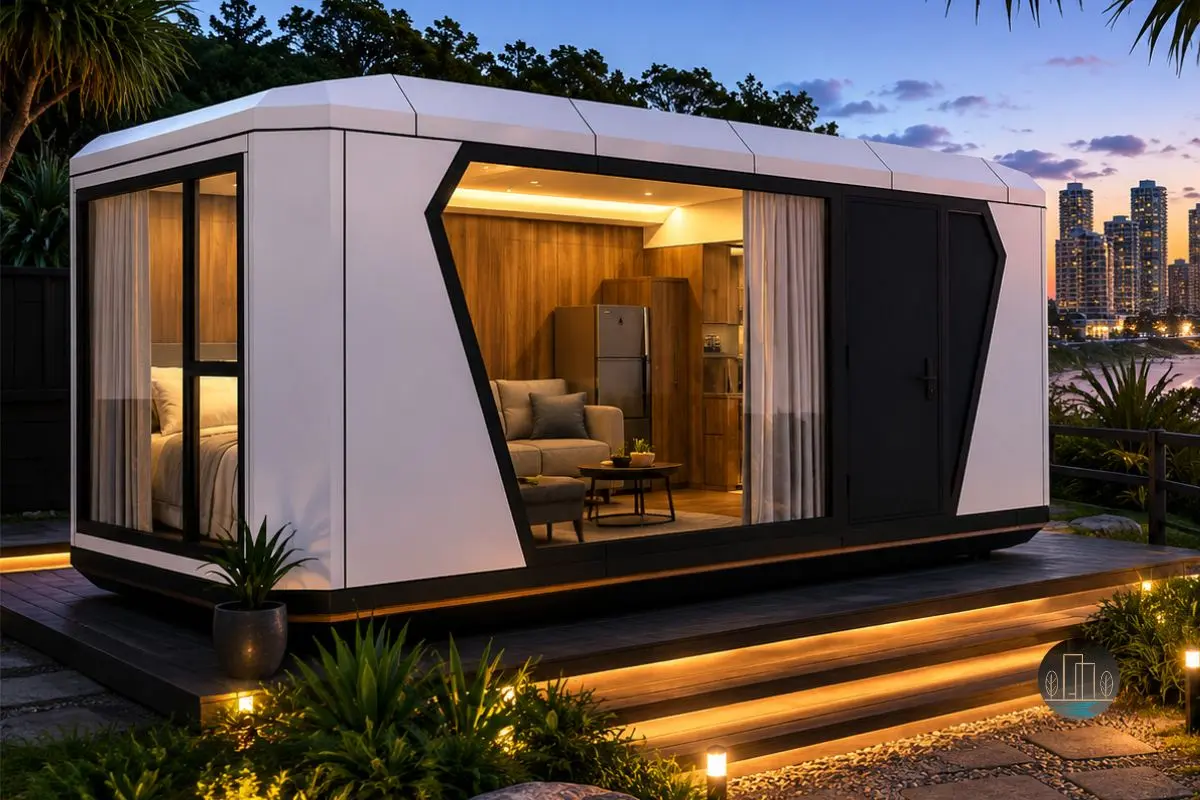
Joey Luxe provides a structured pre-commitment site assessment at no cost. This covers your zoning and approval pathway, indicative site preparation cost range, comparable market data for your region and target nightly rate, and a revenue model using the same framework described on this page.
The assessment is provided because our interest aligns with yours: we only want to place capsule houses on sites where they will perform. An honest feasibility assessment that identifies a weak site before acquisition protects both of us from a bad outcome.
If the feasibility is strong, we move forward together. If it is not — or if there are conditions that need to be met first — we will tell you that clearly. No capital committed until the picture is complete.
Request your site assessmentRelated guides for investors and operators
ROI Calculator
Model your specific nightly rate, occupancy, operating costs, and capsule house count. Instant gross revenue, net profit, yield, and payback period.
Open calculatorAirbnb Returns Australia
Platform-specific returns — nightly rate benchmarks by corridor, Airbnb algorithm strategy, and occupancy analysis for capsule houses.
Read guideHospitality Returns Australia
Multi-unit site economics — how returns scale as you add capsule houses to a glamping park, eco-retreat, or tourism development.
Read guideTourism Investment Australia
How private and institutional capital is approaching Australian tourism accommodation — what makes a site investment-grade.
Read guideTourism Land ROI
Revenue modelling for operators deploying on tourism-zoned land — occupancy benchmarks and ROI scenarios by Australian corridor.
Read guideInvestment & ROI Overview
The full Investment & ROI pillar — both capsule house models, all four investment guides, and the complete case for Joey Luxe.
Read overviewCapsule house feasibility study questions, answered
Get a complete feasibility picture before you commit
Tell us about your property and investment position. We'll walk through every feasibility criterion with you — demand, zoning, cost structure, and revenue potential — at no cost and no obligation.
Chat Now