
Why Capsule Houses are Australia’s Newest High-Yield Asset
A comprehensive investment framework: understanding the capsule house definition, comparative advantages over tiny homes, and the revenue potential within Australia’s high-end short-stay market.
A capsule house is a compact, self-contained premium modular accommodation unit engineered specifically for commercial short-stay use in Australia. It is not a tiny house people live in full-time, and it is not a standard tourist cabin. It occupies a distinct category: high-design, high-performance accommodation infrastructure for operators who need to deploy income-generating assets fast.
The definition: what makes something a capsule house
The term "capsule house" in Australia refers to a modular structure that combines four defining characteristics: compact footprint (typically under 50 sqm), premium design and fitout (hotel-grade or above), commercial-use orientation (Airbnb, glamping, short-stay, boutique hospitality), and factory-built precision (manufactured off-site, installed on your land).
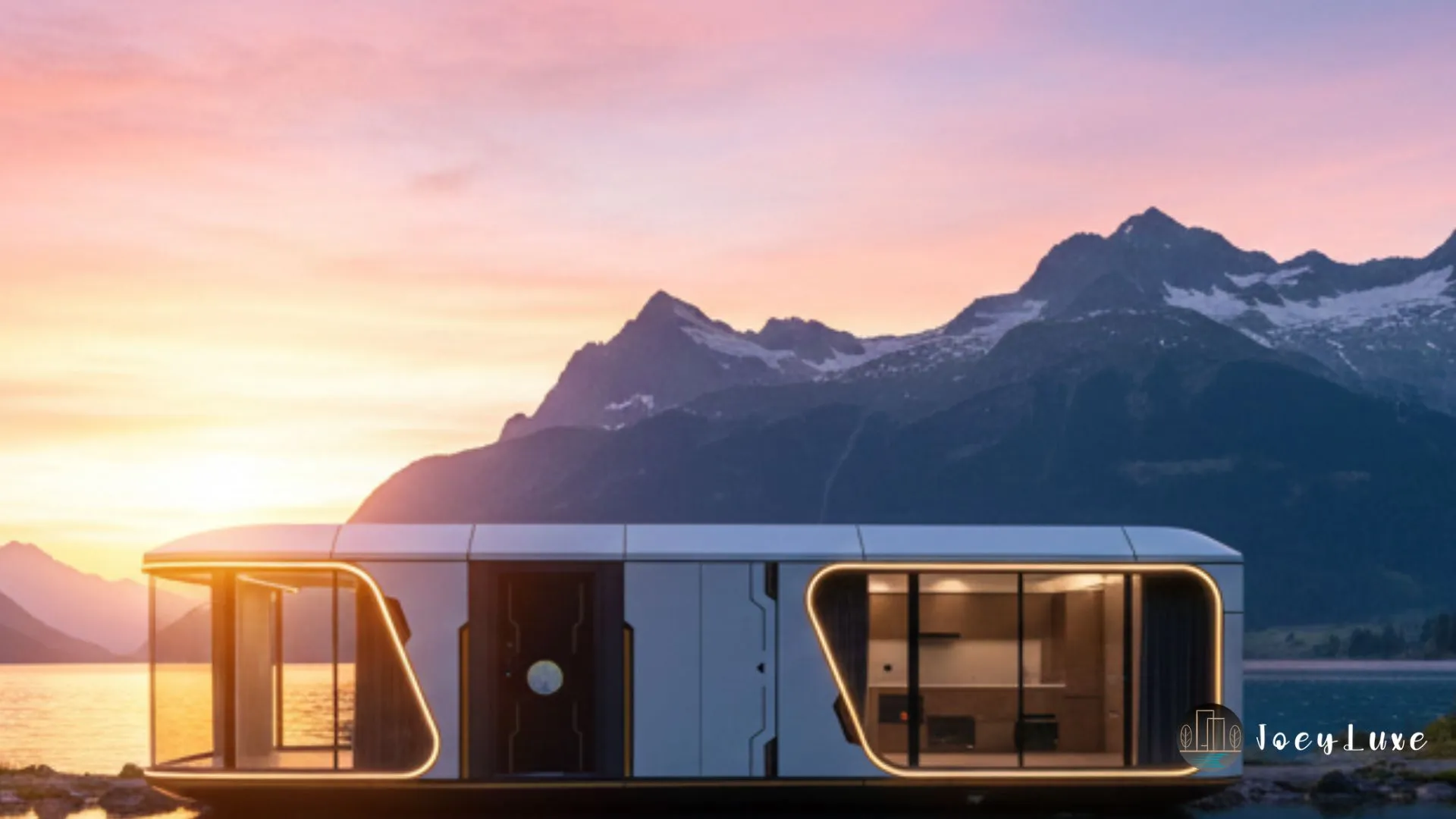
What separates a capsule house from a cheap prefab unit or a converted container is the architecture and specification. Joey Luxe capsule houses feature floor-to-ceiling double-glazed panoramic walls — an architectural feature that makes the guest experience genuinely different from any hotel room and justifies the premium nightly rates that make the investment commercially viable.
A capsule house is designed around the guest experience and the operator's return — not around someone's personal living preferences. Every design decision — the panoramic glazing, the smart lock system, the durable cladding — exists because it increases bookings, justifies higher nightly rates, and reduces operating cost.
Capsule house vs tiny house — the difference that matters
"Tiny house" and "capsule house" both describe compact modular structures. The difference is in purpose, design, and buyer profile — not necessarily in physical construction.
| Factor | Tiny house | Capsule house |
|---|---|---|
| Primary purpose | Residential living — permanent or semi-permanent | Commercial short-stay — Airbnb, glamping, hospitality |
| Design focus | Efficient residential living, storage, lifestyle | Guest experience, nightly rate justification, low maintenance |
| Target buyer | Individual owner-occupier, lifestyle buyer, alternative housing | Operator, investor, resort developer, landowner earning income |
| Revenue generation | Not the primary intent | The entire point — $250–$600+/night nightly income |
| Fitout standard | Residential grade, often personalised | Commercial hospitality grade — consistent, guest-ready |
| Regulatory pathway | Residential dwelling approval | Short-stay tourist accommodation approval |
In practice, the same factory-built modular structure can function as either a tiny house or a capsule house — the distinction is in how it is deployed, how it is used, and what it is optimised for. Joey Luxe's Jetstone and Juniper models are specifically designed and specified as capsule houses — commercial hospitality assets. The J-Alpha and J-Omega serve primarily as luxury tiny house products for residential and Airbnb use.
Who is a capsule house for?
Capsule houses in Australia serve four distinct commercial audiences. Each has a specific reason to choose a capsule house over traditional accommodation construction.
Landowners and property owners who want to add premium accommodation units to an existing site. A capsule house delivers the "luxury in nature" experience guests pay $400–$600/night for, without construction timelines. The panoramic glazing is the key commercial feature — it creates the waking-up-in-nature moment that drives five-star reviews and repeat bookings.
Capital-ready buyers who want a short-stay income asset without the cost and timeline of building or buying property. A capsule house delivers cash-flowing income from day one, on land they already own or lease. See the full Airbnb investment guide for live yield data.
Accommodation operators who need to add premium standalone keys without construction timelines or capex risk. A 5-unit capsule villa addition to a regional resort adds $499,000+ gross annually with installation complete in under a week. See the full hospitality expansion guide.
Developers building tourism accommodation from scratch who need to compress the timeline between capital outlay and first booking. Factory-built capsule villas reduce a 12–18 month construction project to a 3–6 month approval-and-install process.
Capsule house as an investment — what the numbers look like
The investment case for a capsule house is built on three drivers: high nightly rates relative to other asset types, low ongoing operating costs due to factory-quality construction and minimal maintenance requirements, and fast deployment that compresses the gap between capital outlay and first revenue.
A single Jetstone capsule house at $320/night and 62% occupancy generates approximately $72,354 gross annually. After operating costs of around 25%, net annual profit is approximately $54,000. The initial investment of $99,000 (plus $15,000 site prep) is recovered in approximately 2.1 years — before the asset has any capital depreciation concerns. For detailed modelling, use the Joey Luxe ROI calculator.
To use a capsule house commercially as a short-stay rental, council planning approval is required in addition to a building permit. This is standard for all commercial accommodation in Australia. Joey Luxe can help you understand the likely pathway for your site — ask us directly before committing.
Joey Luxe capsule house models
The Joey Luxe capsule range currently comprises two models — the Jetstone (1BR) and the Juniper (2BR). Both are factory-built to Australian Building Code standards, delivered nationwide, and designed for commercial hospitality use.
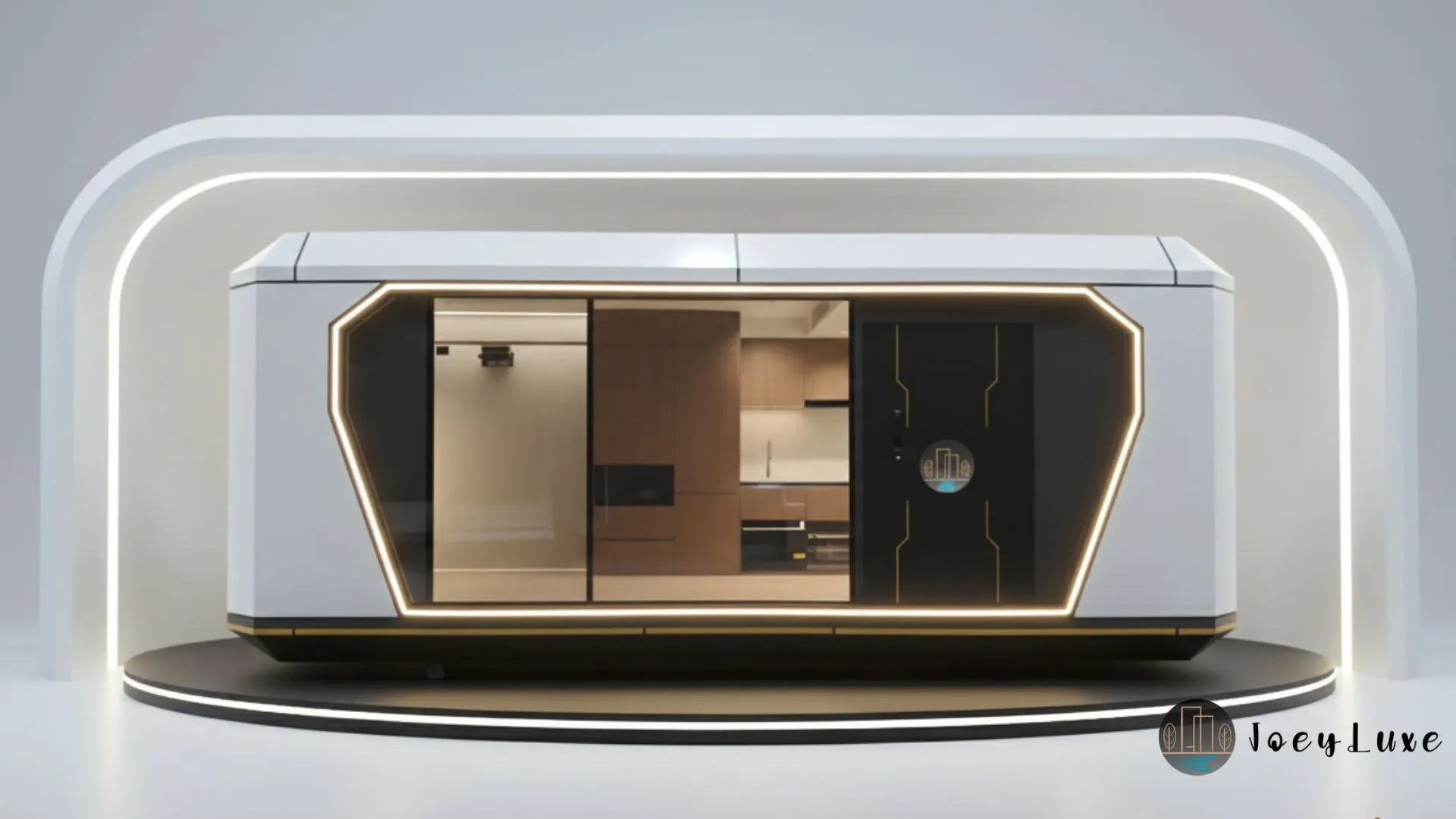
The Jetstone
From AUD $99,000
24.75 sqm · Panoramic glazing · Smart lock · $250–$450+/night
View Jetstone →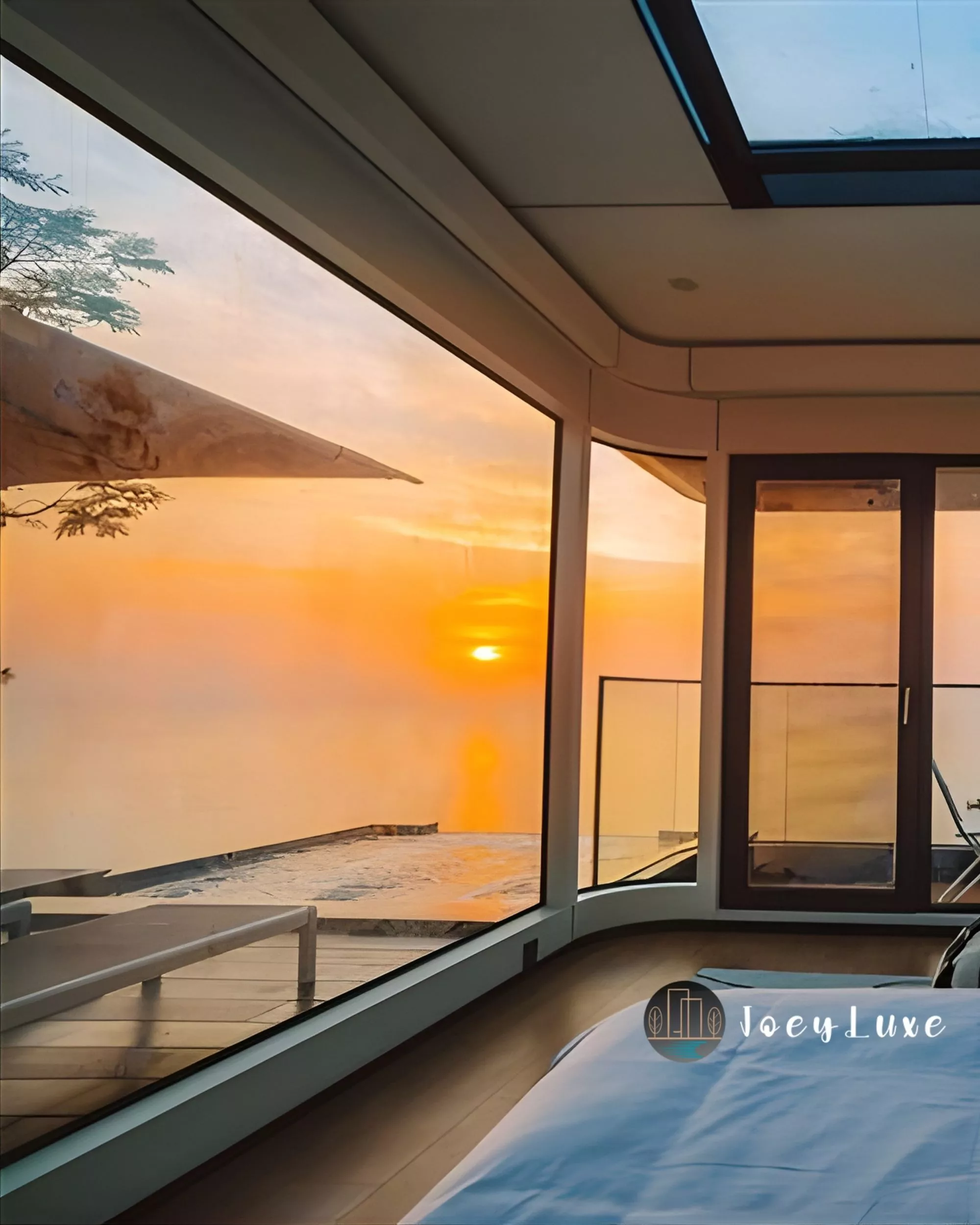
The Juniper
From AUD $159,900
270° panoramic walls · 2BR · Hotel-grade fitout · $350–$600+/night
View Juniper →For the Joey Luxe tiny house range — designed for residential and mixed residential/Airbnb use — see the J-Alpha (1BR) and J-Omega (2BR) models, or browse the full models page.
Related guides
Frequently asked questions
A capsule house is a compact, premium modular accommodation unit designed for commercial short-stay use — Airbnb, glamping, staycation, and boutique hospitality. Joey Luxe's capsule range includes the Jetstone (1BR, from $99,000) and the Juniper (2BR, from $139,900) — factory-built, BCA-compliant, and deployable in days.
A capsule house is designed for commercial hospitality and short-stay income. A tiny house is typically designed for residential living. Both use compact modular construction, but their design priorities, fitout standards, and target buyer differ. Joey Luxe's J-series (J-Alpha and J-Omega) are tiny houses. The Jetstone and Juniper are capsule houses — commercial hospitality assets.
Yes, subject to council approval. A building permit is required for the structure and a planning approval is required for commercial short-stay use. Requirements vary by state and council. Joey Luxe can help you understand the pathway for your specific site before you commit. The investment guide covers the approval process in detail for short-stay operators.
The Jetstone (1BR) starts from $99,000 and the Juniper (2BR) from $139,900 — factory-built, delivered, ex-works. Site preparation (foundations, utility connections, access) adds approximately $10,000–$30,000 depending on your property. For a complete investment model, see the Airbnb investment guide or use the ROI calculator.
Ready to deploy your first capsule house?
Talk to the Joey Luxe team about your site — we will walk you through models, timelines, and income potential for your specific property.