
Glamping Marketing Australia
How to Fill Your Calendar
from Opening Week
The difference between a glamping operation that reaches 65% occupancy in year one and one that limps along at 35% is almost never the unit. It is the listing quality, the photography, the pricing strategy, and the review systems in place from day one. This guide covers all of it — practically and in order.
Marketing as Infrastructure
Marketing is the multiplier on everything else you invest in your glamping operation
A perfectly positioned capsule on an exceptional site with no marketing infrastructure will underperform a mediocre site with exceptional listing quality, professional photography, and dynamic pricing. Marketing is not the final step — it is the system that converts your physical asset into bookings, revenue, and ultimately a self-sustaining business.
For glamping operators in Australia, the marketing challenge is specific: you are competing on Airbnb and Stayz against thousands of properties, most of which look similar in search results. Your photography, listing copy, and early review strategy are the mechanisms by which you separate from the pack and reach the rate and occupancy you underwrote your investment on.
This guide covers the full marketing lifecycle — from platform setup in week one through to the direct booking channel you build in year two — with practical guidance for each stage.
Booking Channels
Where to list — and in what order
Platform strategy is a sequencing question, not an all-at-once decision. Start where the demand is. Build where the fees are manageable. Own the channel when you have the audience.
Airbnb
Start hereThe highest-traffic short-stay platform in Australia and the fastest path to early bookings and reviews. Airbnb's search algorithm rewards new listings with temporary visibility boosts — take full advantage with perfect photography and a well-written description from day one.
- Largest domestic search volume for experience accommodation
- New listing boost — higher early visibility
- Review infrastructure — social proof that compounds
- Superhost status achievable in 12 months — rate and visibility uplift
Stayz
Add in month oneAustralia's dedicated holiday rental platform attracts a different guest demographic — families, longer stays, domestic travellers specifically looking for unique properties. Stayz bookings tend to have longer lead times and higher average stay lengths than Airbnb, which improves calendar stability.
- Family and group traveller segment — higher Juniper demand
- Longer average booking windows — better forward visibility
- Less competitive listing environment than Airbnb
Direct Booking Website
Build in year twoOnce you have 30+ reviews and an established property identity, a direct booking website removes platform commissions (typically 3–15%) and enables guest relationship management, return booking discounts, and email marketing. The cost of building it is recovered in 4–8 direct bookings.
- Zero commission on direct bookings
- Guest data ownership — email list, return booking capability
- Brand authority and premium positioning signal
Photography Standards
The eight shots that determine your booking conversion rate
Guests on Airbnb make a sub-three-second decision based on the hero image. If it does not stop them scrolling, the listing copy is irrelevant. Invest in professional photography before you publish — it is the single highest-return marketing expenditure in a glamping operation.
The hero exterior — golden hour
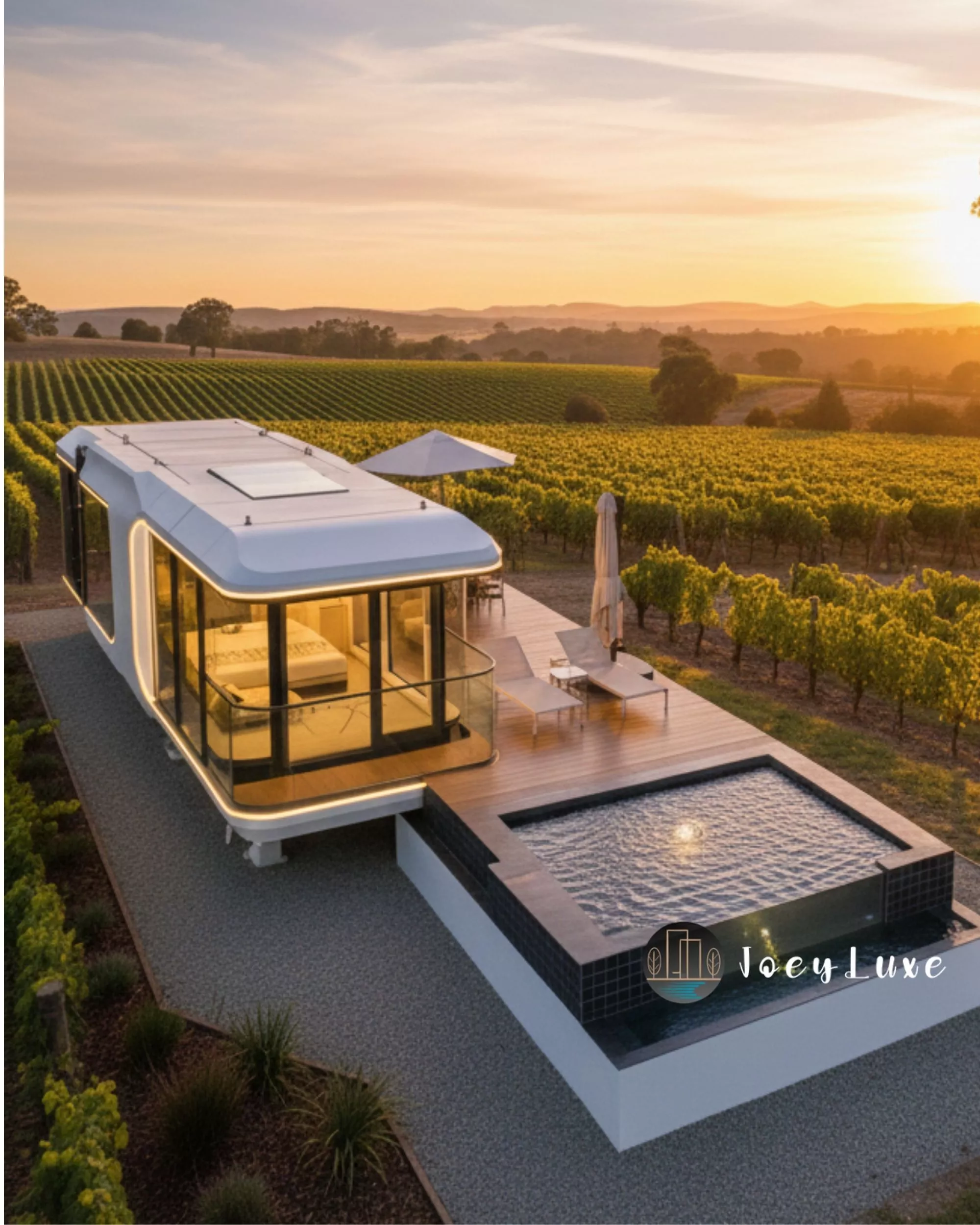
Shot at sunrise or the hour before sunset, with the unit lit warmly against a dramatic sky or landscape. This is your listing thumbnail. Everything else supports it. If you get one shot right, this is it.
View from inside looking out
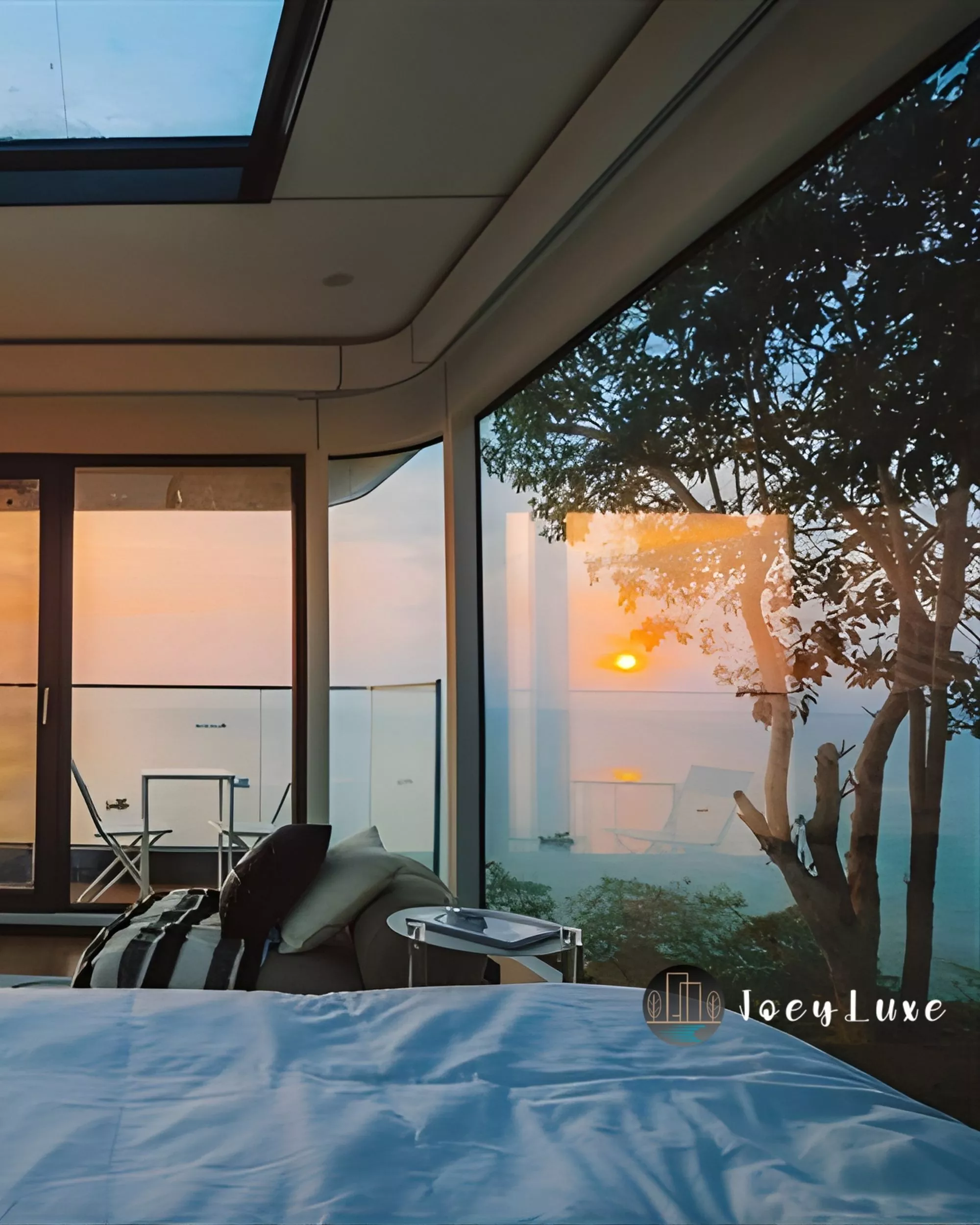
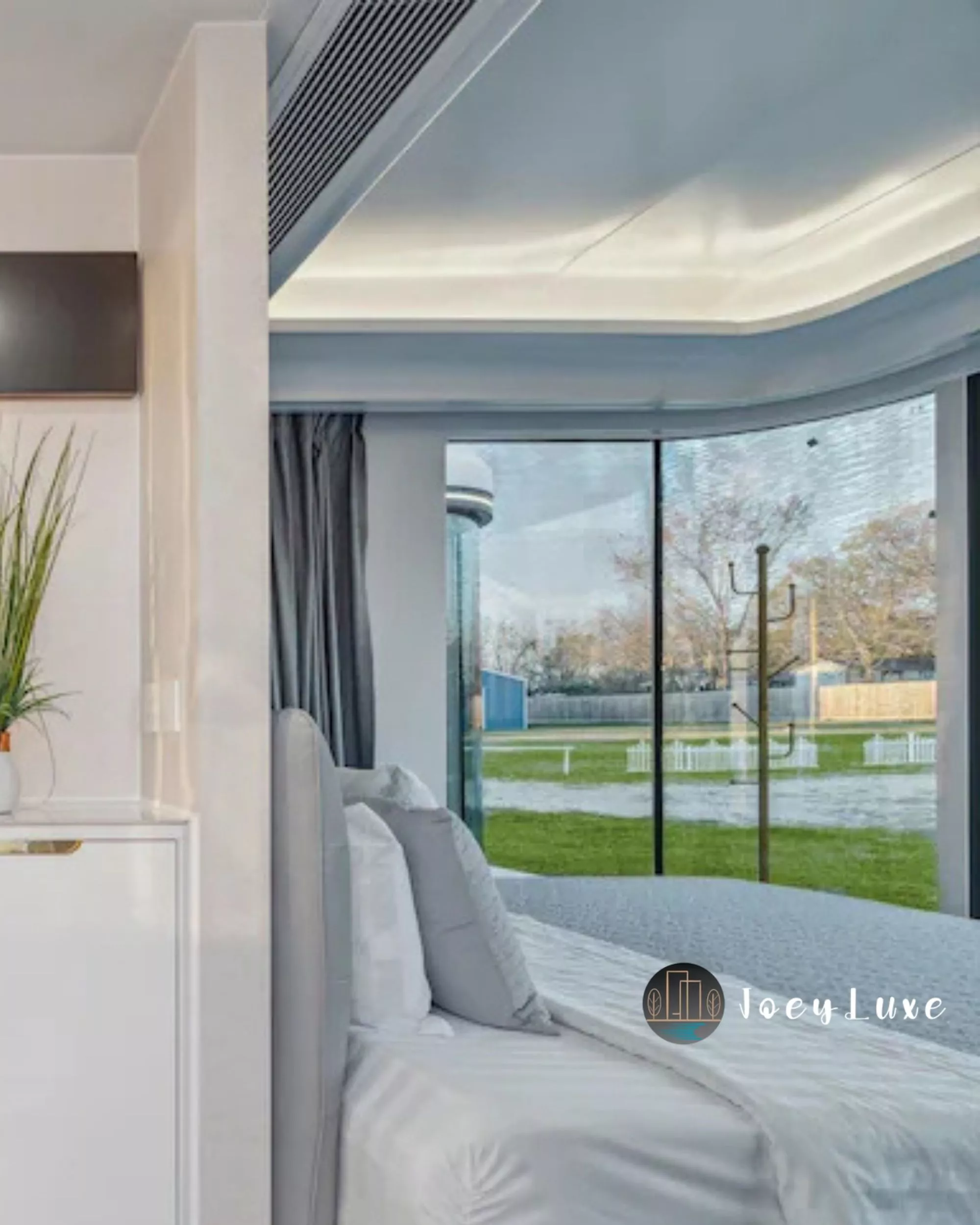
Photographed from inside the unit through the glazed elevation, showing the landscape framed by the architecture. This shot communicates the full-height glass and the view in a single image. Guests respond to it viscerally.
The bedroom — styled
Linen styled with hotel-grade bedding, no clutter, natural light preferred. The bedroom shot is a quality signal for the overall standard of the property. Poorly styled or poorly lit bedroom photos are consistently correlated with lower nightly rate achievement.
The deck — morning setup
Deck photographed with two chairs, a table, coffee cups, and a natural morning light backdrop. The deck shot sells the morning ritual — the experience guests imagine when they book. It is frequently the second image guests click to after the hero.
Kitchen and bathroom — wide
Wide-angle shots of kitchen and bathroom, styled cleanly. These are functional confidence shots — guests need to see that the amenities match the price point. Professional styling and lens choice matters more here than anywhere else in the property.
The view — landscape context
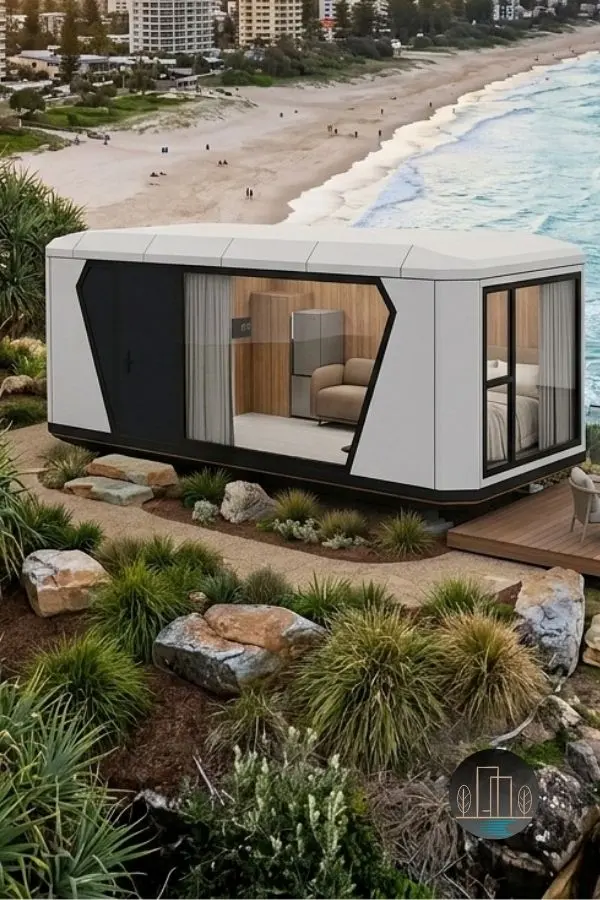
A wide-format landscape shot from the site, showing the setting in context. This is the "where is this" shot that communicates location quality independently of the unit. For sites with strong scenic quality, this image alone justifies the premium over comparable listings.
Night exterior — unit lit
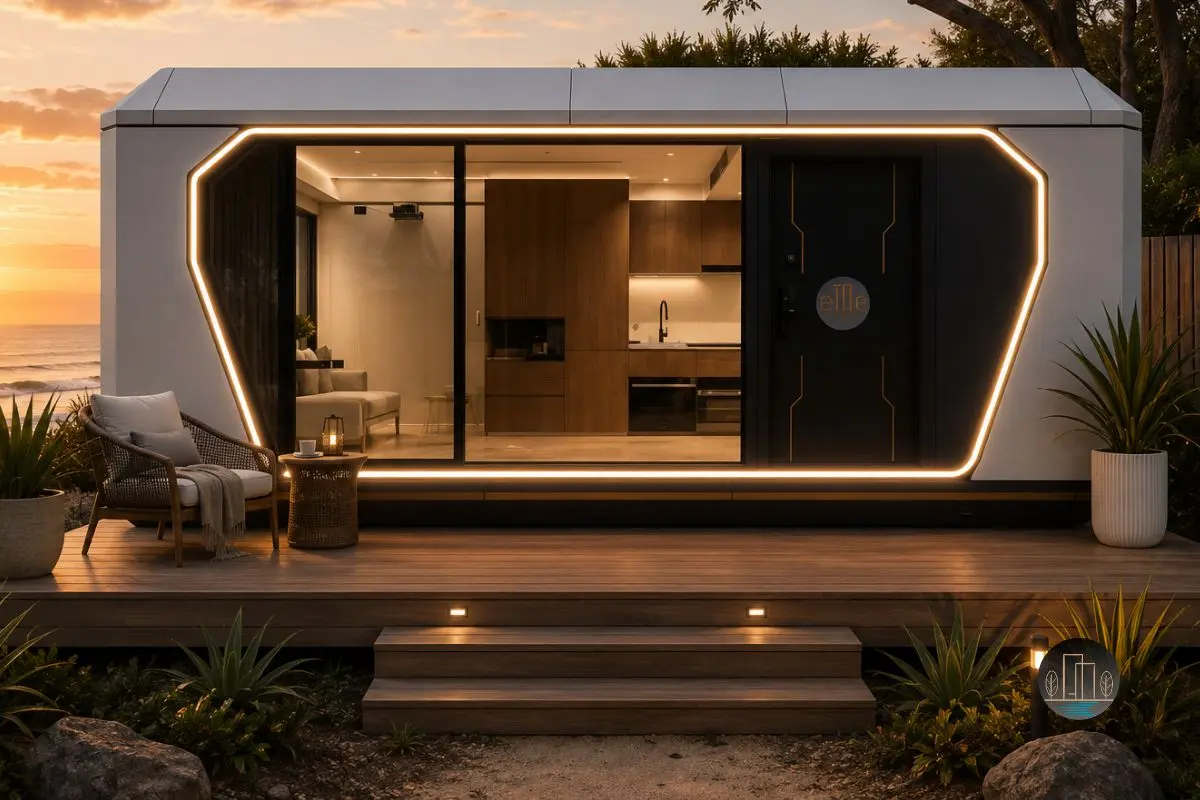
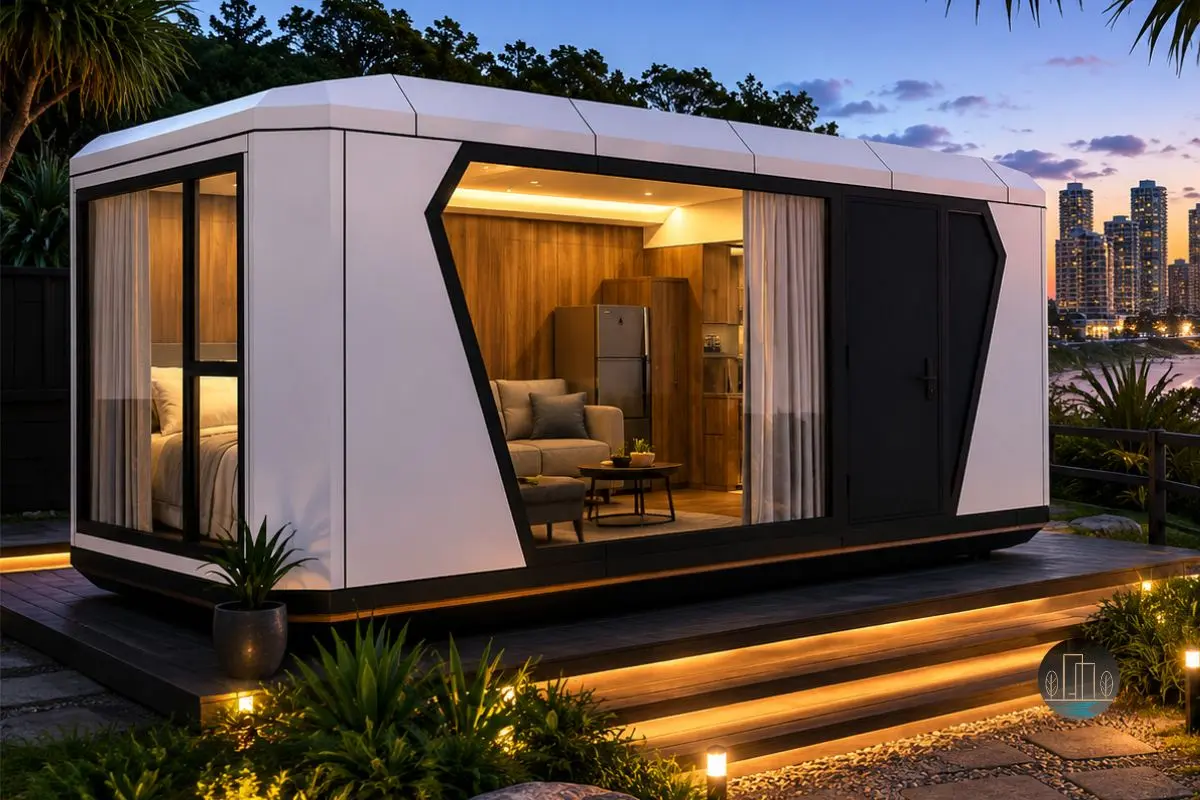
The unit photographed after dark with interior and deck lighting on, showing the warm glow against a night sky or landscape. This is a premium signal shot — it communicates atmosphere and separates a luxury listing from an ordinary one visually.
Lifestyle detail — close in
A styled close-up detail: a book on a side table, a glass of wine on the deck railing, morning coffee on crisp linen. These shots appear at the end of the gallery and convert undecided guests by communicating the feeling, not the feature.
Brief your photographer specifically on each of these eight shots before the shoot day. Most real estate photographers will default to standard room documentation unless explicitly directed toward the atmospheric and lifestyle images that make glamping listings convert. A mood board of comparable high-performing Airbnb listings is the most efficient brief.
Pricing Strategy
Dynamic pricing — the rate structure experienced operators use
A flat nightly rate is the most common pricing mistake in Australian glamping. These are the four seasonal bands that maximise annual revenue at your rate tier.
Airbnb's Smart Pricing tool provides a starting point but tends to undervalue premium properties. Operators running Joey Luxe units typically override Smart Pricing with manual rate calendars based on local demand research. Tools like Pricelabs and Wheelhouse are worth the cost at 4+ units; for 1–3 units, manual management with a clear seasonal framework outperforms automated tools in most cases.
Review Strategy
Building a 4.9-star profile in your first 90 days
Reviews on Airbnb are not a passive outcome — they are the result of a deliberate system. The operations that reach Superhost status in their first year run the same protocol on every booking: set expectations precisely, exceed them in one specific and memorable way, and ask for the review at exactly the right moment.
- Set expectations accurately. Every negative review begins with a discrepancy between the listing and reality. Accurate photography, honest distance disclosures, and clear house rules prevent the most common complaint triggers before guests arrive.
- Create one memorable moment. A small welcome gift (local produce, a handwritten note, a bottle of wine), a fire already lit, or local activity recommendations specific to the guest's stated interests. Something that costs less than $30 and gets mentioned in 80% of reviews.
- Check in without intruding. A brief WhatsApp message the morning after arrival ("Hope you settled in well — let us know if you need anything") catches small issues before they become review mentions and communicates responsiveness.
- Ask for the review at checkout. A checkout message that thanks the guest and includes a direct Airbnb review link. Not aggressive — just clear. Operators who ask get reviewed 60–70% of the time; those who don't get reviewed 30–40% of the time.
Listing Copy
Writing listing copy that converts at a premium price point
Most Airbnb listings describe the property. The best listings describe the experience. There is a difference between "1-bedroom modular pod with full kitchen and deck" and "Wake up to an uninterrupted ridge view from a floor-to-ceiling glass wall, then take your coffee to the private deck while the valley wakes up below." Both are true. Only one books at $420/night.
The framework that works for luxury glamping copy has three components: the setting lead (where is this and what does it feel like), the experience description (what the guest will actually do and feel), and the practical confirmation (the reassurance that the amenities match the price).
- Lead with the setting. Not the address — the feeling. "Set on a private ridge above the Yarra Valley" beats "Located in Healesville, Victoria."
- Describe the experience in second person. "You'll wake to..." not "Guests will find..." The second person is more immersive and converts better at premium price points.
- Front-load the view. Whatever makes this property distinctive — the view, the landscape, the setting — should be in the first sentence. Not the third paragraph.
- End with the practical. Full kitchen, fast WiFi, private bathroom, air conditioning. These are not the headline — but omitting them creates doubt that kills conversion.
Launch Roadmap
Month-by-month — from installation to full-velocity bookings
Book a professional photographer during the unit's first week. Publish on Airbnb and Stayz with complete listings — all fields filled, accurate description, pricing set 10–15% below your target rate to accelerate early bookings and reviews. Enable Instant Book.
Target 4–6 bookings in month one. Run the review protocol on every guest. Respond to every review publicly within 24 hours. Address any issues mentioned privately and quickly. Your goal is 8–12 reviews with an average of 4.9 stars before raising rates.
Once 10+ reviews are published, raise rates to your target level. Implement your seasonal pricing calendar. Block Christmas and Easter with peak-season rates. Identify the next major local event and set event pricing. Review your listing's search ranking weekly.
Analyse booking patterns — which days and months are hardest to fill? Introduce mid-week discounts for shoulder periods. Consider a 3-night minimum on peak weekends. Begin building a guest email list through checkout communications for a future direct booking channel.
Build a simple direct booking website. Email your past guest list with a return-booking offer. Begin collecting guest emails at checkout for ongoing communication. A 10% repeat booking rate removes $15,000–$30,000 in annual platform commissions at typical occupancy levels.
Questions
Glamping marketing — what operators ask
Continue Reading
Related resources for glamping operators
Start Building
Ready to plan your glamping operation?
Talk to the Joey Luxe team about your site, your timeline, and how to build the right foundation for a high-occupancy glamping business from day one.