
How to Start a Glamping Business in Australia
Glamping is one of the fastest-growing segments in Australian short-stay accommodation — and for landowners, farmers, and property investors who move early, the income opportunity is genuinely significant. This guide walks you through every step of launching a profitable glamping operation in Australia, from validating your site through to building the review base that sustains long-term occupancy.
Is glamping actually profitable in Australia?
The short answer is yes — but only if you approach it as a hospitality business with real investment discipline. The operators who struggle are the ones who underinvest in the accommodation itself, pick a location because they already own the land rather than because the land is suited to the purpose, or try to compete on price against canvas glamping at $180/night. The operators who do exceptionally well position in the premium segment and treat every guest stay as a product to be systematically refined.
Here is what the numbers look like for well-positioned luxury glamping operations in Australia in 2026:
Occupancy in the glamping segment holds differently from traditional accommodation. Travellers actively seek out design-led, experience-first stays — particularly for weekends, long weekends, anniversaries, and milestone occasions. A well-photographed, well-reviewed luxury capsule villa in a scenic location will almost always outperform a standard holiday rental in the same area on both nightly rate and booking consistency.
The critical insight is that glamping income scales non-linearly with quality. The difference in nightly rate between a canvas tent and a double-glazed modular capsule is not incremental — it is a different market entirely. This is why the investment calculus consistently favours the premium option when the ROI is modelled across a five-year horizon.
The key variable is location quality — which is why site selection is covered in depth as its own section below. A unit in the Yarra Valley or Hunter Valley at $420/night is a fundamentally different business from a unit in a flat paddock at $230/night, even with the same capital outlay.
Understanding your total startup costs
One of the most common planning errors new operators make is budgeting only for the unit and underestimating the full cost stack. The unit price is the largest line item, but it is rarely the only one. Here is an honest breakdown of what a single-unit glamping setup typically costs from zero to first booking in Australia.
For a single-unit setup, budget $130,000–$240,000 all-in depending on model, site conditions, and finish level. This is the number to underwrite against your ROI model — not just the unit price. At target rate and occupancy, most operators recover total first-year investment within 2.5–3 years.
Choosing the right glamping accommodation type
Not all glamping accommodation delivers the same business outcome — and the type you choose directly determines your nightly rate ceiling, occupancy consistency across seasons, maintenance burden, council approval pathway, and long-term asset value. Here is an honest comparison.
| Type | Setup cost | Lifespan | Winter performance | Nightly rate potential | Approval pathway |
|---|---|---|---|---|---|
| Bell tents & canvas | $8,000–$25,000 | 5–10 years | Poor — 30–40% occupancy drop | $150–$280/night | Often tent/caravan provisions |
| Geodesic domes | $30,000–$70,000 | 10–15 years | Moderate | $200–$350/night | Varies by council and material |
| Timber pod — custom build | $60,000–$150,000 | 15–25 years | Good if insulated | $220–$420/night | DA typically required |
| Luxury modular capsule villas | $99,000–$180,000 | 30+ years | Excellent — year-round comfort | $300–$600+/night | Standard building permit |
Why modular capsules outperform on ROI
- Rate ceiling around $250–$280 regardless of location
- Occupancy drops 30–40% in winter months
- Replacement cycle every 5–10 years — ongoing capital cost
- Guest comfort compromised in heat, cold, and rain
- Negative reviews in poor weather consistent across operators
- Limited asset value — depreciates rather than holds value
- No rate ceiling — scales with location and presentation quality
- Year-round occupancy — double glazing and full insulation
- 30+ year structural lifespan — asset holds value on your balance sheet
- Consistent comfort in all seasons — no weather-dependent reviews
- Hotel-grade guest experience justifies $400–$600+/night
- Relocatable — flexible asset if plans change
The question is not which type costs less to set up — it is which generates the best return on invested capital over five years. On that measure, luxury modular consistently wins because higher nightly rates and better off-season occupancy compound over time in ways that a lower-rate, higher-maintenance canvas operation cannot match.

Site selection — what determines your nightly rate ceiling
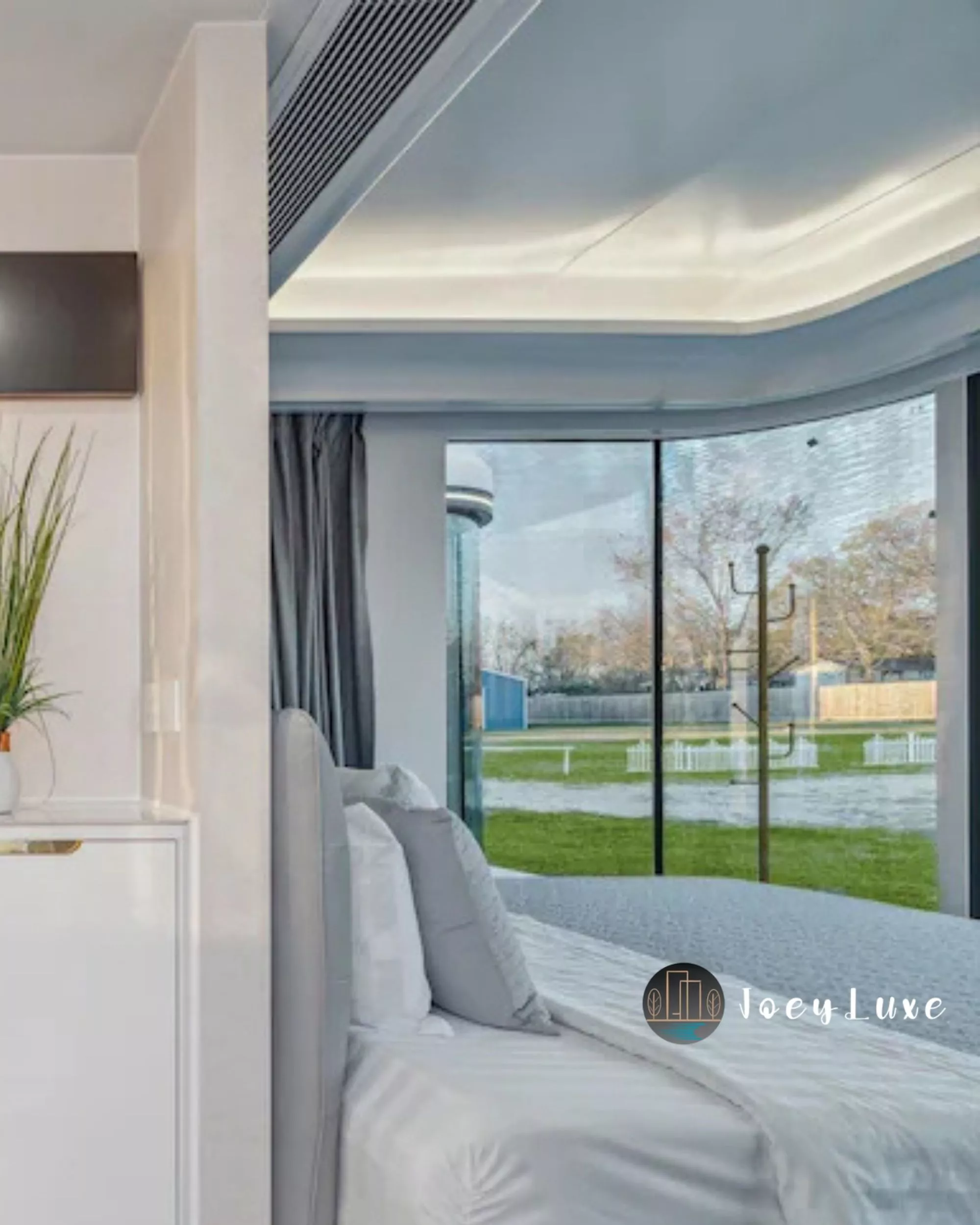
Site selection is the single highest-leverage decision in a glamping business. The same unit, positioned in a Tier 1 location versus a Tier 3 location, can earn three times the nightly rate. No amount of marketing, photography, or fit-out excellence can fully compensate for a site that lacks scenic quality or demand proximity. Get this decision right and everything downstream compounds in your favour.
There are three primary drivers of glamping site income in Australia:
- Scenic quality on site — elevated land, water views, old-growth vegetation, mountain backdrops, or dramatic topography. The immersive landscape experience is the core product of premium glamping.
- Proximity to tourism demand drivers — wine regions, national parks, coastal hinterland, high country, surf coast. Travellers need a reason to be in the area before they choose your property as their base.
- Drive time from a major city — the sweet spot is 90 minutes to 2.5 hours from Melbourne, Sydney, Brisbane, or Perth. Long enough to feel like a destination escape; short enough for a spontaneous long weekend booking.
Rate tier by location quality
| Location tier | Characteristics | Jetstone nightly rate | Juniper nightly rate | Annual occupancy |
|---|---|---|---|---|
| Tier 1 — Iconic | Recognised destination, dramatic views, strong repeat-visitation region | $450–$700+ | $580–$900+ | 70–80% |
| Tier 2 — Premium | Strong regional destination, good views, solid tourism demand within 60 min | $320–$450 | $400–$580 | 62–72% |
| Tier 3 — Standard | Rural setting, moderate scenery, functional access to some attractions | $220–$320 | $280–$400 | 50–62% |
| Tier 4 — Marginal | Flat land, limited nearby demand, low destination recognition | $150–$220 | $200–$280 | 35–50% |
Demand hotspots by state
Mornington Peninsula, Yarra Valley, High Country, Surf Coast hinterland, Grampians. Strong year-round demand driven by Melbourne's 5M+ population base.
Hunter Valley, Southern Highlands, Blue Mountains fringe, Byron Bay hinterland, Snowy Mountains. Extremely strong weekend demand from Sydney.
Sunshine Coast hinterland, Whitsunday gateway, Scenic Rim, Gold Coast hinterland. Strong domestic tourism base with extended peak season.
Margaret River, Pemberton tall timber, Nannup and Blackwood Valley. High-value international and interstate travellers willing to pay premium rates.
Barossa Valley, Clare Valley, McLaren Vale, Adelaide Hills. Boutique wine tourism with sophisticated travellers seeking premium nature experiences.
East Coast, Freycinet area, Huon Valley, Central Highlands. Rapidly growing eco-tourism destination with strong international appeal and premium rate potential.
Before committing capital to any site, confirm in writing: vehicle access suitable for a delivery truck, power connection or off-grid viability, water supply (mains or tank system), waste management (septic or composting), mobile signal for smart locks and guest use, and council zoning for short-stay tourist accommodation.
Permits and council approvals — what you actually need
Council approvals are the part of this process that most new operators underestimate. Permits are not a formality — they vary significantly by council and property type, they take time, and the consequences of skipping them range from forced removal of structures to significant fines and the inability to hold public liability insurance. The good news is that for a fixed modular structure, the pathway is generally clear once you understand the system.
The two approvals most glamping operators need
- Building permit — required for any structure on permanent foundations. Confirms the structure is built to the National Construction Code. A factory-built modular villa from Joey Luxe includes engineering certification that streamlines this process.
- Land use or planning permit — confirms that short-stay tourist accommodation is a permissible use on your specific lot under your local planning scheme. This is often the more complex of the two approvals and is the one operators most commonly fail to obtain before investing.
Typical approval timeline
Contact your LGA's planning department. Request written confirmation of the applicable zone, permissible uses, and what approval pathway applies to short-stay accommodation on your lot. This is free and takes 5–10 business days to receive a written response.
If a Development Application is required, engage a local planning consultant to prepare and lodge it. Do not attempt a DA without professional assistance — poorly prepared applications are the primary cause of delays. Budget $2,500–$6,000 for consultant fees.
Most DAs take 6–12 weeks for simple applications, 3–6 months for complex or contested ones. Run your factory order and site preparation concurrently — Joey Luxe's production schedule is designed to align with typical approval timelines so the unit arrives when approvals clear.
Once planning approval is granted, the building permit is typically straightforward for a certified modular structure. Joey Luxe provides the engineering documentation your building surveyor needs to process this efficiently.
State-by-state overview
- Victoria — Secondary dwellings under 60m² can proceed without a planning permit on qualifying lots, but short-stay commercial use typically requires a planning permit separately. VicSmart provides a fast-track pathway for low-risk applications. Council Responsible Authority varies significantly in processing speed.
- New South Wales — The SEPP provides streamlined pathways for certain secondary dwellings. Short-stay accommodation in rural zones often requires a DA and may require an environmental assessment. Check whether your land is within a bushfire planning zone early.
- Queensland — Rural residential and agricultural zoning can accommodate tourist accommodation uses. A Material Change of Use application is typically required. Processing times at regional councils are generally faster than metropolitan LGAs.
- Western Australia — Development approval is generally required for tourist accommodation in most zones. Requirements for management plans and waste management systems are more specific in some LGAs.
- South Australia — Development approval required in most cases. The new PDI Act streamlines some approvals but short-stay accommodation remains a discretionary assessment in most rural zones.
- Tasmania — Short-stay accommodation in rural zones is increasingly supported as part of the state's eco-tourism strategy. Check with your local council for current provisions — some LGAs have specific provisions for glamping-style accommodation.
The single most important piece of advice on approvals: get written confirmation from your council's planning department before spending any money on a structure or site preparation. Not verbal advice. Not what worked for someone else in a Facebook group. Written, specific confirmation about what is permitted on your specific lot and what approval pathway applies.
Step-by-step: how to launch your glamping business
Here is the practical sequence that works. Each step builds on the last — skipping ahead creates problems that are expensive to fix.
Run the feasibility check — before spending a dollar
Assess your land against three criteria: scenic quality (would a city person pay $400/night to wake up here — take an honest phone photo and compare it to top Airbnb listings in the region), demand proximity (what tourism anchor is within 90 minutes), and practical access (can a flatbed delivery truck reach the install position?). Then contact your council and get written confirmation of the planning pathway for short-stay accommodation on your specific lot. This step costs nothing and eliminates the two most expensive mistakes operators make. See the full site selection guide for the complete six-criteria checklist.
Model the numbers before committing capital
Search Airbnb for comparable properties within 30 minutes of your site. What are the top-reviewed properties charging? What occupancy signals do their calendars show? This is your market reality check — not a theoretical rate from a brochure. Apply your realistic rate and occupancy to the ROI calculator on our Glamping ROI page to confirm payback viability against your total budget. If the numbers work comfortably, proceed. If they only work at optimistic assumptions, revisit the site or unit selection.
Choose your unit and secure your order
Select your model based on bedroom count, target guest type, and site footprint. The Joey Luxe Jetstone (1BR, panoramic glazing) starts from $99,000 and is optimised for couples retreats. The Juniper (2BR, extended living deck) starts from $159,900 and opens the property to families and groups — the guest segment with the highest booking value. Compare them in detail on the capsule glamping units guide. Secure your order with a deposit — factory production queues fill ahead of peak delivery periods and lead times need to align with your approvals timeline.
Lodge approvals and prepare the site in parallel
Lodge your development application or building permit application with your council. Run site preparation concurrently — there is no reason to wait for approval before doing earthworks, laying your concrete pad or screw piles, and pre-running utility connections. Most site preparation takes 4–8 weeks. Joey Luxe's factory build runs on a schedule designed to align with typical approval timelines — the unit is ready to deliver as approvals clear.
Install, fit out, and commission professional photography
A Joey Luxe villa is craned into position and connected to services in 2–4 working days. Once installed, fit out the interior with quality linen, premium bathroom amenities, a coffee machine, outdoor seating, and fire pit. Then commission professional photography before listing. This is not optional — on Airbnb, listing photography is the single biggest driver of click-through and booking conversion. Budget $600–$1,500 for a proper shoot with golden-hour exterior, deck lifestyle, interior, and view shots. It will pay back within two bookings. Read the full photography shot list in the marketing guide.
Launch, build reviews, then optimise rate
Go live on Airbnb first — largest domestic reach. Set your launch rate 10–15% below your target to accelerate early bookings and reviews. Enable Instant Book. Run the review protocol on every guest (accurate pre-stay expectations, one memorable welcome moment, a 24-hour check-in message, a direct review request at checkout). Once 10+ reviews are live at 4.8+, raise to full target rate and implement your seasonal pricing calendar. Add Stayz and build toward a direct booking channel in year two. For the full platform and occupancy strategy, see the glamping marketing guide.
Marketing, platforms, and building your review base
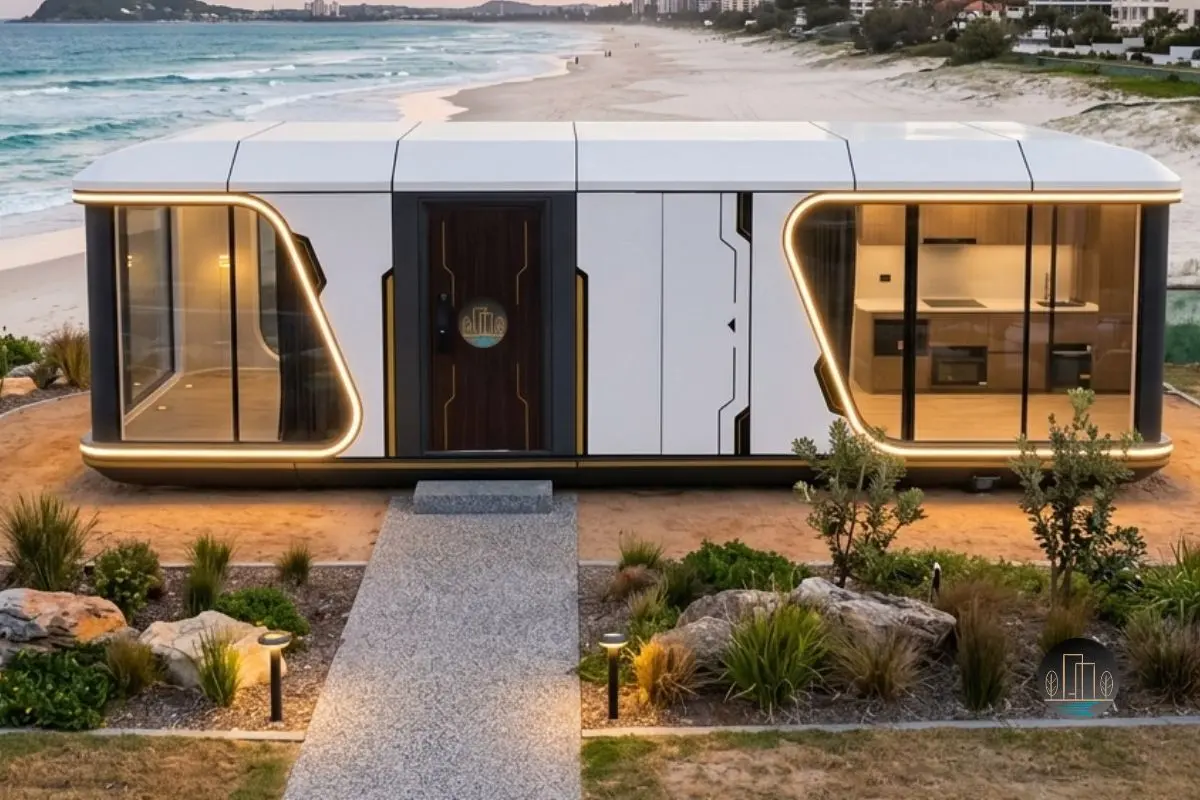
The difference between a glamping operation that reaches 65% occupancy in year one and one that limps along at 35% is almost never the unit. It is the listing quality, photography, pricing strategy, and review systems in place from day one. Marketing is the multiplier on every other investment you make.
Which platforms to list on — and in what order
Largest domestic audience. Start here. New listing visibility boost. Superhost status within 12 months increases conversion and rate potential significantly.
Family and group travellers. Longer booking windows and higher average stay length. Less competitive listing environment than Airbnb.
Build in year two. Eliminates 15–20% platform fees, owns guest relationships, and enables repeat booking discounts that drive year-on-year occupancy.
The review velocity strategy
Your first ten reviews are your most important business asset. They determine your Airbnb search ranking, your booking conversion rate, and the rate ceiling you can sustain. Operators who treat review-building as a formal process in the first 90 days outperform those who treat it as a passive outcome — consistently and materially.
- Set expectations precisely. Every negative review begins with a gap between listing and reality. Accurate photography, honest descriptions, and clear house rules prevent the most common triggers.
- Create one memorable moment. A welcome basket of local produce, a fire already lit, or specific local activity recommendations. Something that costs under $30 and appears in 80% of reviews.
- Check in at 24 hours. A brief message the morning after arrival catches small issues before they become review mentions and communicates responsiveness.
- Ask for the review at checkout. A checkout message that thanks the guest and includes a direct Airbnb review link. Operators who ask get reviewed 60–70% of the time; those who don't, around 30–40%.
The six mistakes that kill glamping businesses early
Every one of the following is preventable with the right preparation. Each is also common enough that it is worth naming explicitly, because the operators who avoid them significantly outperform those who learn through them.
Land ownership and site suitability are unrelated. An existing rural block is a convenient starting point — but if it lacks scenic quality, demand proximity, or practical access, it will underperform regardless of the unit quality or marketing investment. Run the honest assessment first.
Nothing reduces booking conversion as immediately or as predictably as listing photography that was taken on a phone. A professional shoot costs $600–$1,500 and is recovered within two bookings at target rate. Operators who launch without it consistently underperform on both occupancy and nightly rate achievement in year one.
The same night in December and the same night in June are worth very different amounts to a glamping guest. Operators running a flat rate leave 20–40% of annual revenue on the table during peak periods. A basic four-band seasonal pricing calendar is a 30-minute setup that compounds across every year of operation.
Operating without the correct approvals creates compounding risk: no ability to hold commercial insurance, personal liability exposure, potential forced removal of structures, and the inability to list on major platforms if a guest complaint triggers a compliance inquiry. The process is manageable — skipping it is not.
A $159,900 unit listed with $3,000 worth of furniture and a bare mattress will earn less than a $99,000 unit furnished with $15,000 of considered, premium fit-out. Guests at $400/night are paying for the full experience. The interior fit-out is not a cost to minimise — it is a revenue driver.
Dropping your rate to fill calendar gaps in the first few months while the review base is thin is a rational short-term decision. Making price competition a strategy is not. A glamping operation that competes on price attracts guests who review on price — and those reviews suppress your ability to raise rates later. Compete on quality, presentation, and experience from day one.
How Joey Luxe helps you launch faster
Most people who want to start a glamping business face the same constraint: the gap between wanting to earn from their land and actually generating income is too long. Traditional on-site construction takes 12–18 months from concept to first booking. Joey Luxe compresses that to weeks — because the unit arrives complete.
- Factory-built to completion — structure, double glazing, insulation, joinery, fit-out, and covered deck are finished in a controlled factory environment. What arrives on your site is the unit you ordered — not a construction project.
- 2–4 working day installation — delivered, craned into position, and connected to services. First booking potential from the moment installation is complete.
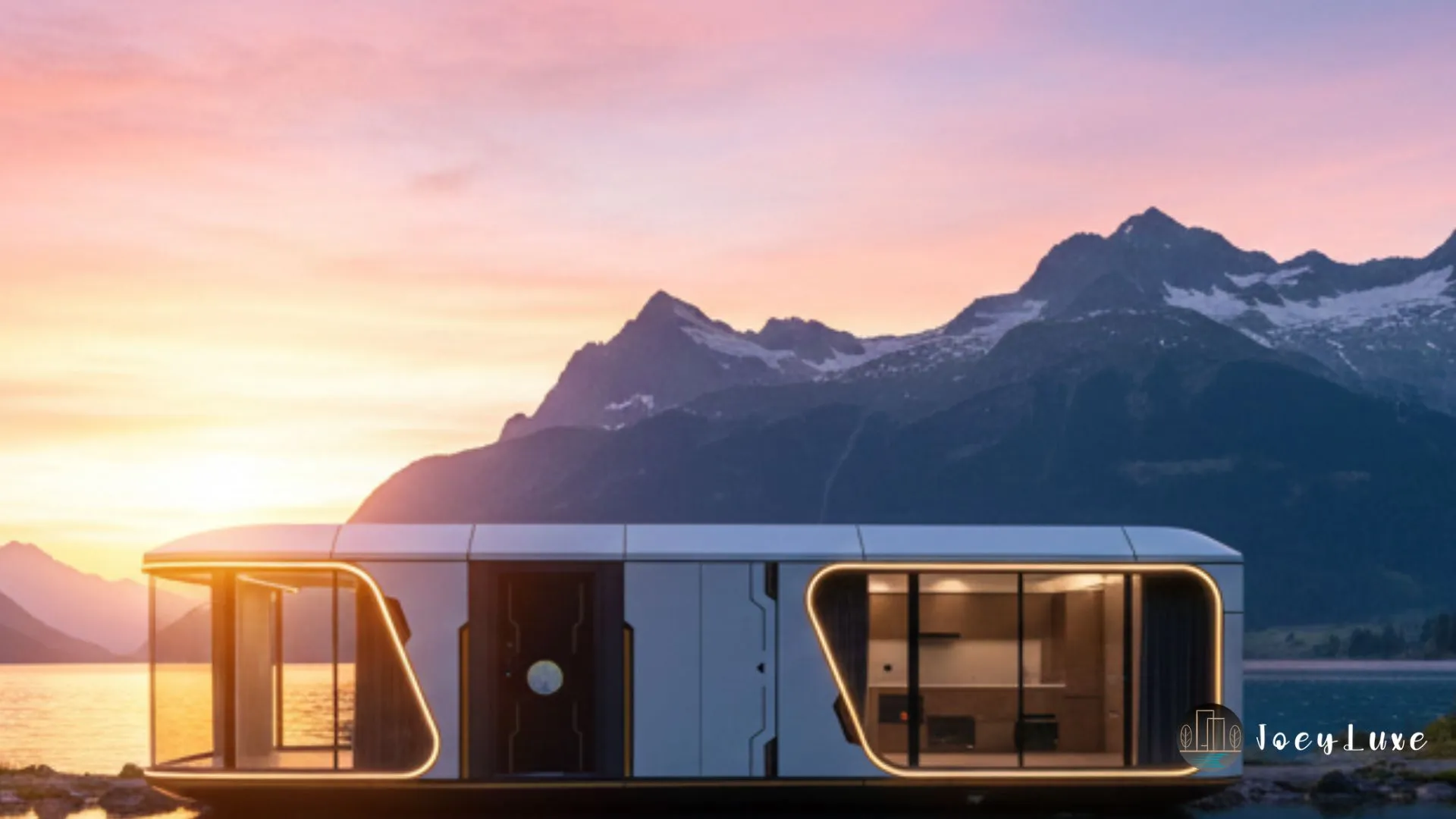
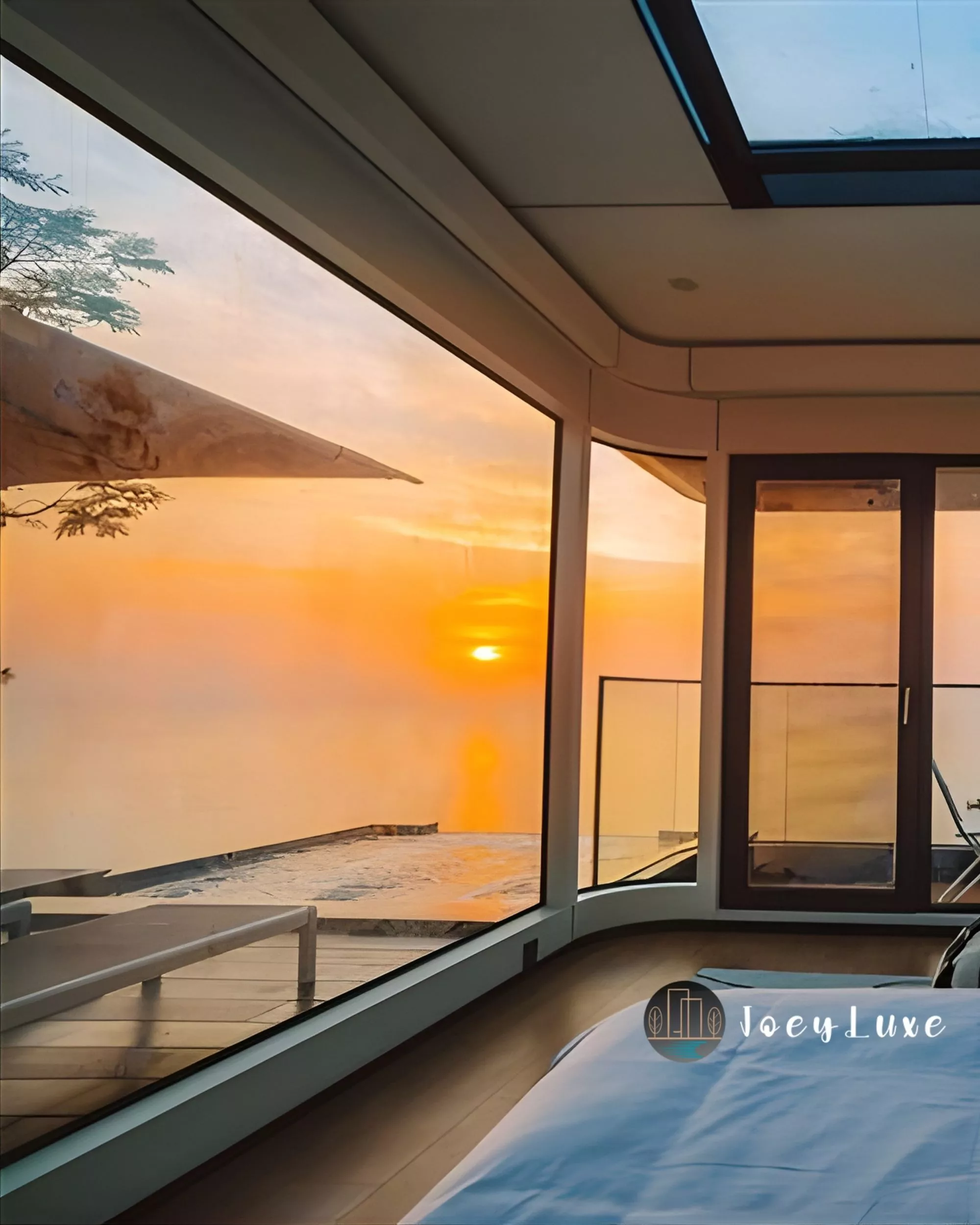
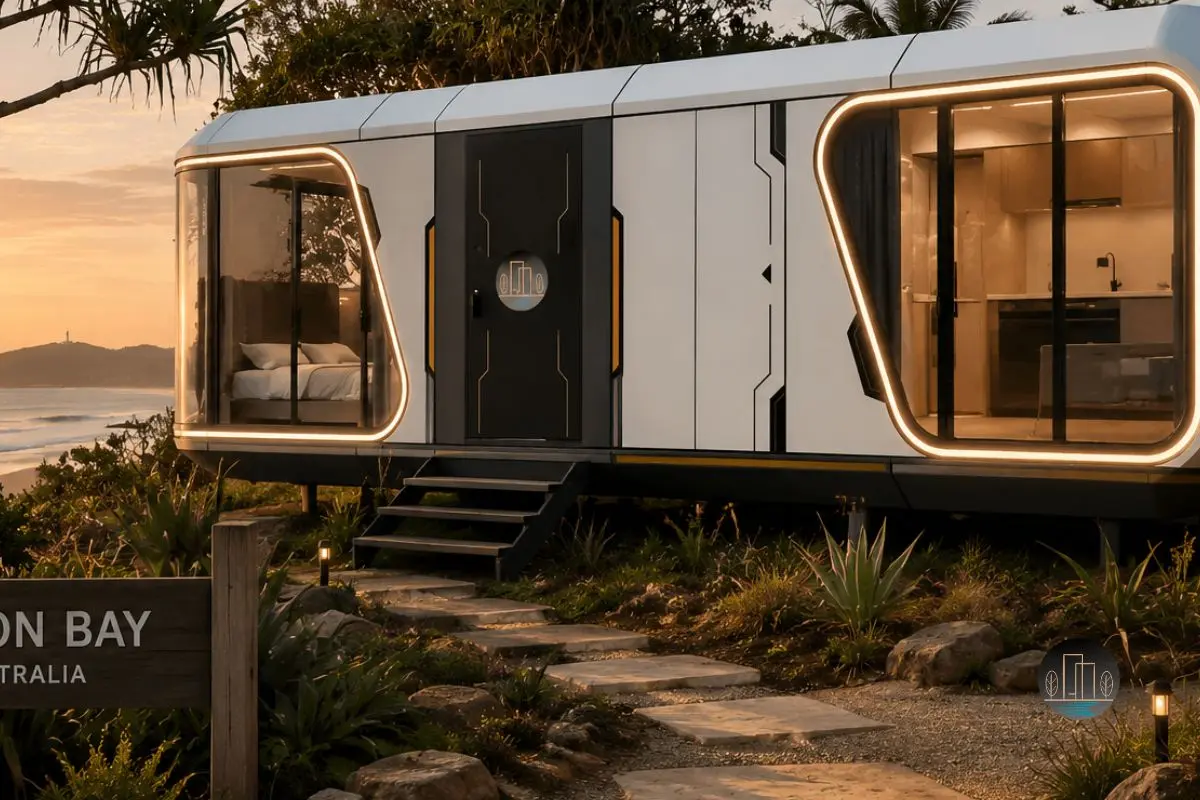
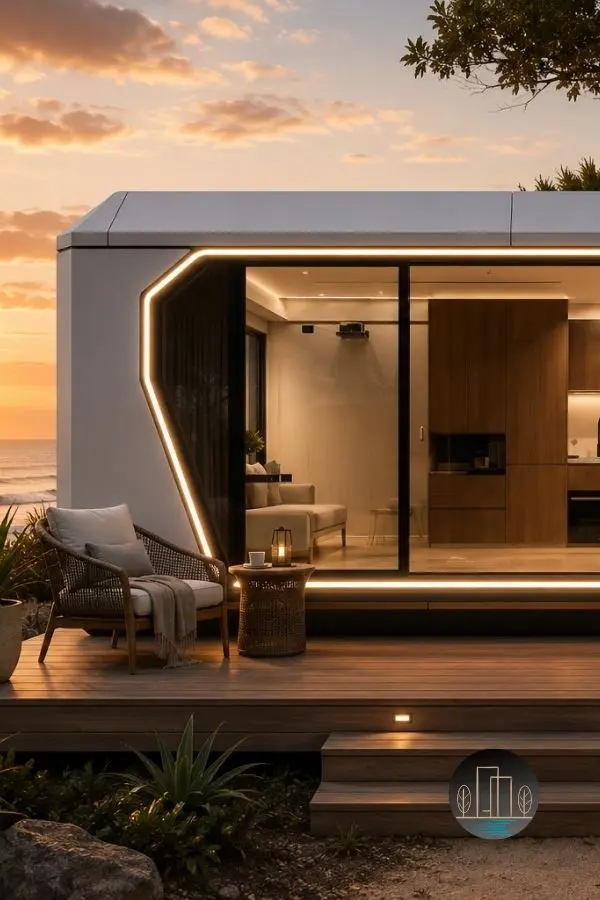
- Architect-designed for nightly rate performance — full-height glazing, 270° panoramic views, luxury interior language. These are the design elements that justify $400–$600+ nightly rates and appear in five-star reviews.
- Built for Australian conditions — double glazing, PU and XPS insulation, fluorocarbon-baked aluminium cladding. Year-round comfort means year-round occupancy — no winter rate cliff.
- Engineering certified — every unit comes with the documentation your building surveyor needs. This streamlines your building permit significantly compared to custom-built alternatives.
- Relocatable — if plans change, the villa can be moved. A flexible asset, not a permanent commitment to one site configuration.
Ready to turn your land into a high-yield glamping operation?
Talk to the Joey Luxe team about your site, your goals, and which capsule configuration makes the strongest case on your numbers. No pressure — just a straightforward conversation.
Frequently asked questions
A realistic all-in budget for a single luxury modular unit is $130,000–$240,000 — covering the unit ($99,000–$180,000), site preparation ($10,000–$30,000), utilities ($5,000–$25,000), fit-out and furnishing ($8,000–$20,000), approvals ($2,000–$12,000), and photography and launch costs. Operating in the premium segment — a proper modular villa rather than a canvas tent — typically delivers faster payback through higher nightly rates and better year-round occupancy consistency. At Tier 2 location rates and 65% occupancy, a single Jetstone unit returns net profit of approximately $55,000–$65,000 annually.
Yes — well-positioned glamping operations in Australia regularly achieve 55–75% annual occupancy at $300–$600/night for luxury modular units. A single 2-bedroom Juniper at $460/night and 65% occupancy generates approximately $109,000 in gross annual revenue. After operating costs of around 25%, net annual profit is in the range of $80,000–$90,000. Payback on the villa investment is typically achievable within 2–3 years. Location quality and presentation are the primary determinants of whether a glamping operation hits these numbers or falls materially short of them.
Almost always yes. Fixed glamping structures on permanent foundations need a building permit at minimum and a Development Application in most councils. Short-stay tourist accommodation use requires separate land-use approval distinct from residential zoning. The rules vary significantly by state and individual LGA. The first step is always contacting your council's planning department for written confirmation of what applies to your specific lot and proposed use. Do not rely on verbal advice or what worked for someone else in a different location.
Luxury modular capsule villas consistently deliver the best five-year ROI. They command $300–$600+/night versus $150–$280 for canvas glamping, hold their rate through winter due to full insulation and double glazing, have a 30+ year structural lifespan, and hold asset value on your balance sheet. The higher upfront cost is offset by materially better revenue per night, lower ongoing maintenance, and no replacement cycle. The detailed comparison — including rate ceiling modelling — is in our luxury glamping pods guide.
With a factory-built modular villa, physical installation takes 2–4 working days once approvals are in place. Total timeline from order to first booking is 3–6 months — mostly spent on council approvals and site preparation. This compares extremely favourably to traditional construction, which typically takes 12–18 months for a similar result. The Joey Luxe factory build runs concurrently with approvals wherever possible to minimise the gap between approval and installation.
Airbnb is the starting point for most Australian operators — largest domestic reach, familiar booking experience, and the review infrastructure that builds guest trust fastest. Stayz attracts family and group travellers with longer booking windows and higher average stay lengths. Build a direct booking channel in year two to reduce platform commissions on an established review base. The full platform strategy with timing and channel sequencing is covered in the glamping marketing guide.
Yes — many Joey Luxe operators manage their property entirely remotely while working full-time. Smart lock systems enable automated contactless check-in and checkout without any on-site presence. Local cleaning and turnover crews handle the physical work between guests. Guest communication can largely be handled via automated Airbnb messaging templates. With 1–3 units, most operators report spending 3–6 hours per week on property management once initial systems are established. The first 90 days require more time as you refine operations — after that, it genuinely runs close to passively.
The most common reasons a glamping operation underperforms are: poor site selection (no scenic quality or demand proximity), phone-quality listing photography, no review velocity strategy in the first 90 days, flat nightly pricing with no seasonal variation, and competing on price rather than quality. Each of these is preventable with the right preparation. The six most common operator mistakes are covered in detail above in this guide — addressing all of them before launch is what separates operations that reach target occupancy in year one from those that spend two years building momentum they should have had from month one.
Start your glamping business the right way
Joey Luxe modular capsule villas are deployed by glamping operators, farm stay owners, and property investors across Australia — earning premium nightly rates from the first week of operation.